What Is The B-2 Spirit?
The B-2 Spirit. The premier stealth heavy bomber featuring a flying-wing design, nuclear capabilities, and global reach.
United States
Origin
Stealth bomber
Role
Mach 0.95
Top speed
15,200 m
Service ceiling
B-2 Spirit Specifications
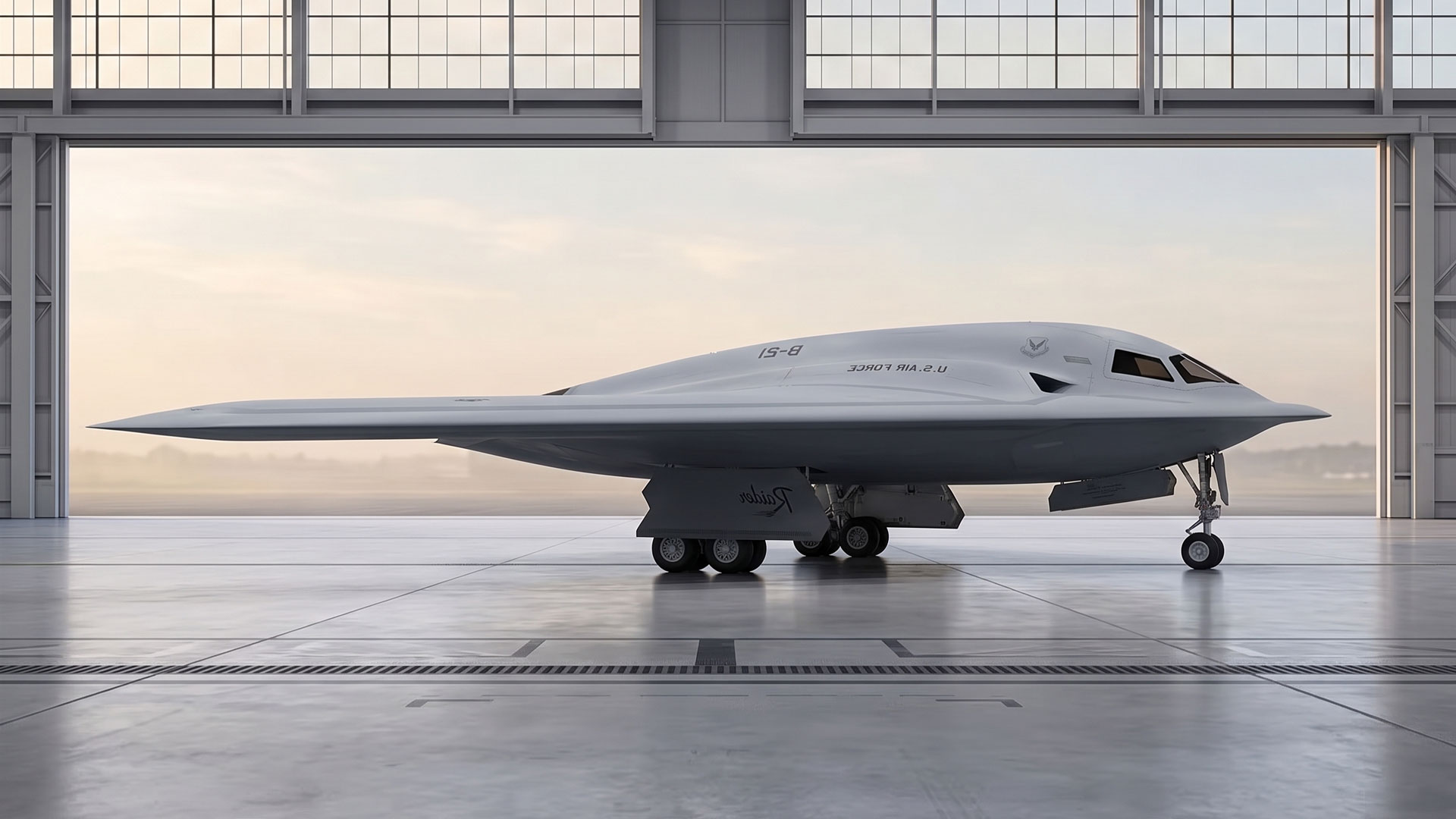
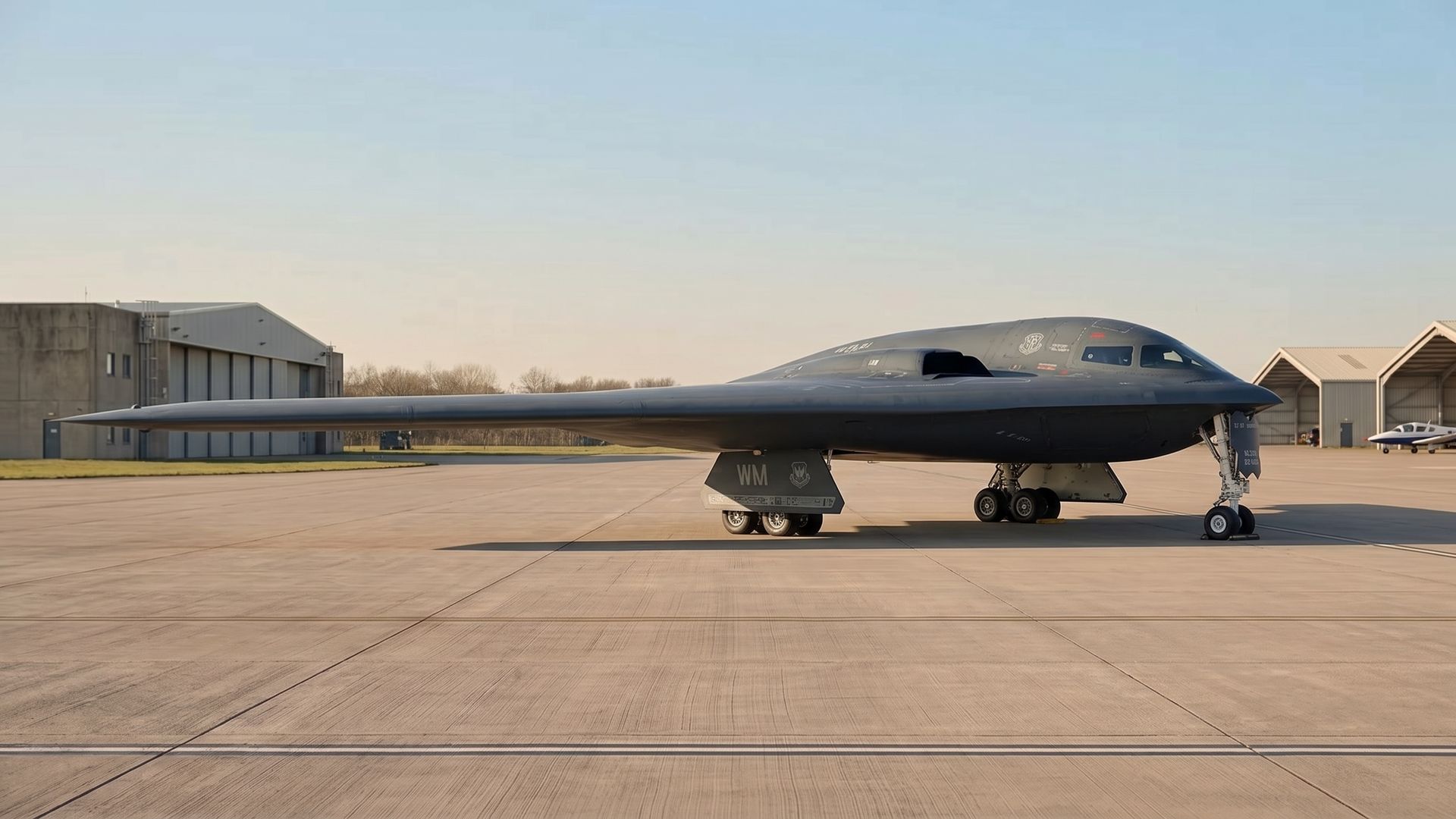
The Northrop Grumman B-2 Spirit is an American heavy strategic bomber designed with advanced low-observable, or rather, stealth technology to penetrate dense anti-aircraft defence systems. Its flying-wing design allows it to deliver both conventional and thermonuclear payloads across vast inter-continental ranges without concern of detection.
Performance
Top speed
High subsonic, approximately Mach 0.95 (approx. 1,010 km/h or 628 mph at altitude)
Service ceiling
50,000 feet (15,200 metres)
Combat radius
Approximately 3,000 nautical miles (5,600 km/3,500 miles) unrefuelled
Rate of climb
Approximately 3,000 feet per minute (15.2 m/s)
Airframe
Crew
2 (Pilot and Mission Commander)
Length
69 feet (21 metres)
Wingspan
172 feet (52.4 metres)
Empty weight
Approximately 160,000 pounds (72,575 kg)
Engine
4 × General Electric F118-GE-100 non-afterburning turbofans (producing 17,300 lbf/77 kN thrust each)
Service
First flight
17 July 1989
Unit cost
Approximately $2.13 billion USD per aircraft (average total programme cost per unit in 1997 dollars)
Operators
United States Air Force (USAF)
What Weapons Does The B-2 Spirit Carry?
The B-2 Spirit features two internal weapons bays engineered to preserve its stealth radar profile while holding up to 40,000 lbs (18,000 kg) of ordnance. It is capable of deploying a versatile mix of precision-guided conventional weapons, heavy bunker busters, standoff cruise missiles, and strategic nuclear gravity bombs.
Weapon
Category
Loadout
Range
GBU-31 JDAM
Category
Precision-Guided Bomb (GPS)
Loadout
Up to 16 × 2,000 lb bombs
Range
Approx. 15 nautical miles (28 km)
Mk 82 / GBU-38
Category
Conventional / GPS Bomb
Loadout
Up to 80 × 500 lb bombs
Range
Approx. 15 nautical miles (28 km)
AGM-158 JASSM
Category
Air-to-Surface Standoff Missile
Loadout
Up to 16 missiles
Range
Over 200 nautical miles (370 km)
GBU-57 MOP
Category
Massive Ordnance Penetrator
Loadout
Up to 2 × 30,000 lb bunker busters
Range
Direct precision drop (high altitude)
B61 Nuclear Bomb
Category
Strategic Thermonuclear Bomb
Loadout
Up to 16 bombs
Range
Direct gravity / free-fall drop
B83 Nuclear Bomb
Category
High-Yield Thermonuclear Bomb
Loadout
Up to 16 bombs
Range
Direct gravity / free-fall drop
Category
Loadout
Range
Category
Loadout
Range
Category
Loadout
Range
Category
Loadout
Range
Category
Loadout
Range
How Fast Is The B-2 Spirit?
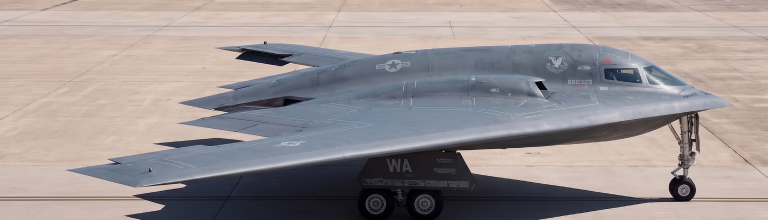
The B-2 Spirit operates at high subsonic speeds, reaching a top speed of approximately Mach 0.95 (around 628 mph or 1,010 km/h at high altitude). Unlike traditional combat fighter jets that rely on supersonic speed and afterburners to escape threat zones, the B-2 was engineered without afterburners to minimise its infrared and acoustic signatures. Its sub-Mach performance is an intentional design trade-off: by avoiding supersonic shockwaves and extreme heat friction, the aircraft preserves its ultra-low-observable stealth skin. Cruising efficiently at around Mach 0.85, the bomber relies on evasion rather than raw speed to survive in contested airspace.
How Was The B-2 Spirit Developed?
Development of the B-2 Spirit originated during the late 1970s under the United States Department of Defense's secret Advanced Technology Bomber (ATB) project. Conceived during the height of the Cold War, the aircraft was designed to bypass sophisticated Soviet integrated air defence systems and strike deeply buried strategic targets. Northrop (now Northrop Grumman) won the development contract in 1981, pioneering computer-aided design to model the aircraft's revolutionary "flying wing" structure. This tailless layout, coupled with radar-absorbent materials (RAM) and buried engine intakes, dramatically reduced its radar cross-section to that of a small bird. The programme remained highly classified until the public rollout of the first prototype at Plant 42 in Palmdale, California, in November 1988, followed by its maiden flight in July 1989.
Has The B-2 Spirit Seen Combat?
Yes, the B-2 Spirit has a extensive operational history in active combat zones. It made its combat debut in 1999 during Operation Allied Force over Serbia, where it flew non-stop round-trip missions from Whiteman Air Force Base in Missouri to deliver satellite-guided Joint Direct Attack Munitions (JDAMs). The B-2 subsequently served as a lead striking platform during Operation Enduring Freedom in Afghanistan (2001) and Operation Iraqi Freedom (2003). In March 2011, B-2 bombers executed strikes against Libyan airfields during Operation Odyssey Dawn to enforce a UN no-fly zone. In January 2017, two B-2s completed a 34-hour round-trip mission to destroy ISIS training camps in Libya, demonstrating the platform's ability to project power anywhere on the globe.
Who Operates The B-2 Spirit?
The B-2 Spirit is operated exclusively by the United States Air Force (USAF). All operational aircraft are assigned to Global Strike Command's 509th Bomb Wing, stationed at Whiteman Air Force Base in Missouri. The 509th operates two active bomb squadrons: the 13th Bomb Squadron ("Grim Reapers") and the 393rd Bomb Squadron ("Tiger Tigers"). Additionally, the Missouri Air National Guard's 131st Bomb Wing provides associate personnel to fly and maintain the fleet alongside active-duty service members. Due to sensitive stealth technologies and strategic treaty restrictions, the United States government has never exported or shared operational control of the B-2 Spirit with foreign allies or commercial operators.
B-2 Spirit FAQs
Common questions about the B-2 Spirit, its capabilities and whether civilians can fly it.
Can a civilian fly in the B-2 Spirit?
No, a civilian cannot fly the B-2 Spirit, which can only be flown after rigorous military pilot training. Candidates must be commissioned as United States Air Force officers, complete Undergraduate Pilot Training (UPT) and log substantial hours in jet aircraft such as the T-38, B-1B or B-52H before selection for specialised stealth training in the B-2 simulator and aircraft.
Can I take the controls of the B-2 Spirit?
No, members of the public and civilian pilots cannot fly or take the controls of the B-2 Spirit. Because it carries top-secret stealth technology and strategic nuclear command systems, and cost over $2 billion per airframe, flight operations are restricted to certified USAF combat pilots with high-level security clearances.
How much does a flight in the B-2 Spirit cost?
You cannot buy a flight in the B-2 Spirit at any price, as civilian flights in active B-2s do not exist. The strategic heavy bomber costs approximately $130,000 to $150,000 per flight hour to operate, covering maintenance of its radar-absorbent skin, specialised hangar storage, fuel and ground crews. Jetify flights in jets such as the L-39 Albatros start from around £2,500, $3,300 or €2,900.
Is there a weight or height limit to fly the B-2 Spirit?
Yes, military pilots selected for the B-2 Spirit must meet United States Air Force physical entry standards. Pilots generally need to be between 5’4” (162 cm) and 6’5” (195 cm) tall, with weight proportions compatible with the ACES II ejection seat geometry, cockpit overhead clearance and safe emergency extraction procedures.
How much G-force does the B-2 Spirit pull?
The B-2 Spirit is cleared for smooth manoeuvring up to approximately +2.0 to +2.5G on operational missions, because it is a heavy strategic bomber with a large flying-wing structure. Agile fighter jets such as the F-16 or F-22 pull up to +9G, but the B-2 prioritises flight stability and stealth endurance over high-G aerobatics.
How far in advance can I book a B-2 Spirit flight?
You cannot book a B-2 Spirit flight, because it is an active-duty, nuclear-capable military aircraft operated solely by the United States Air Force. Its flight schedules are classified operational deployments set by military command directives and global defence priorities, so no public or commercial booking is possible at any notice.
Explore the database