
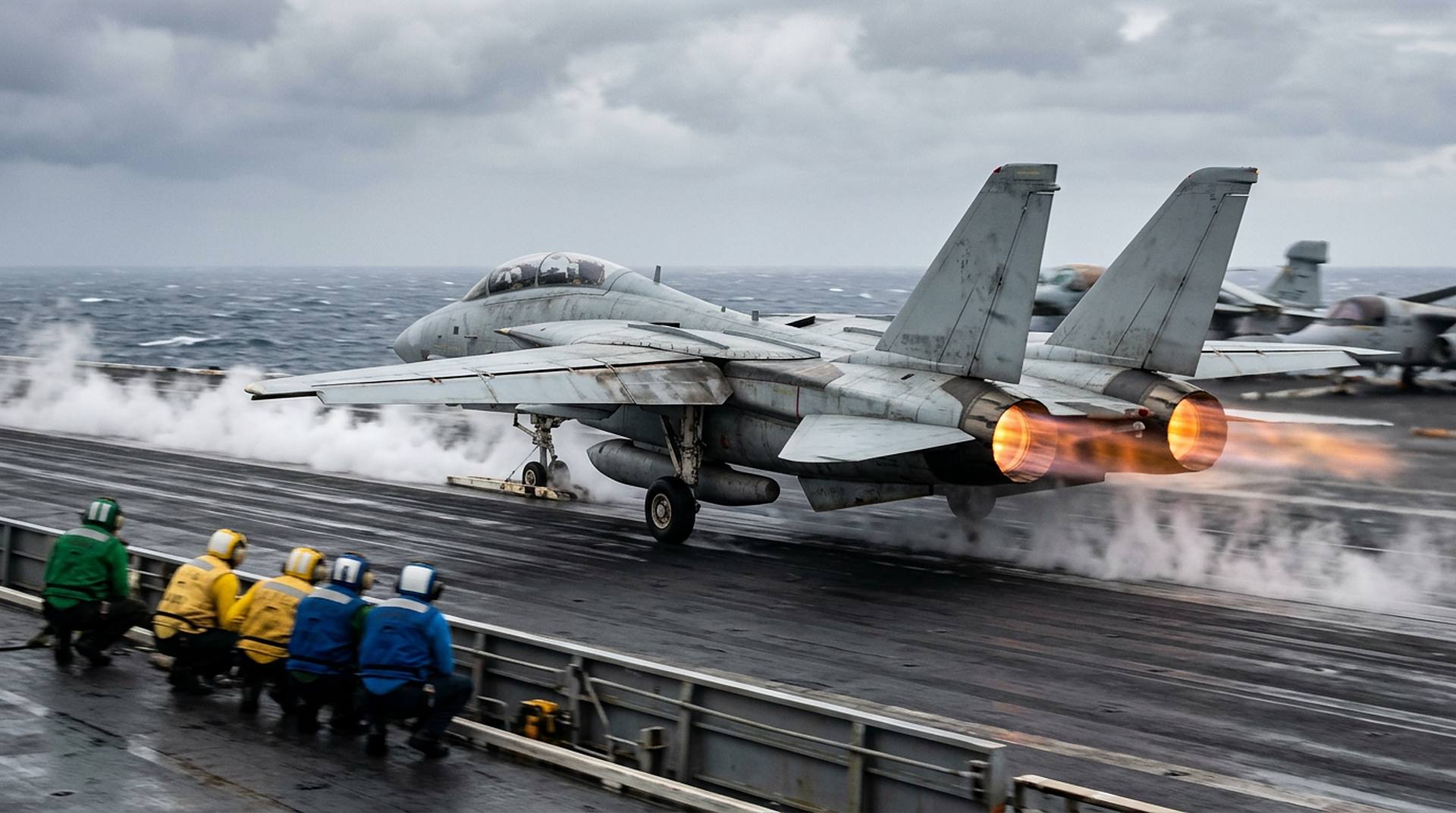
Aircraft comparison
F-14 Tomcat vs F-15 Eagle
The Navy’s swing-wing carrier fighter against the Air Force’s tactical fighter. Compared on mission, weapons, speed and service, from US Navy and Air Force sources.
Updated October 2026 · 2 minute read
Is the F-14 better than the F-15?
They did different jobs. The F-14 Tomcat was a two-seat, carrier-based air superiority fighter built around the long-range AIM-54 Phoenix missile. The F-15 Eagle is a land-based tactical fighter that one pilot can fight alone. On published figures the F-15 is faster, at 3,018 km/h against 2,485 km/h, and flies higher. The F-14 retired from US Navy service in 2006; the F-15 is still in production as the F-15EX.
F-14 Tomcat
Long-range missile reach · Carrier operation · Two-crew workload
F-15 Eagle
Top speed · Ceiling · Still in production
F-14 vs F-15 specifications
F-14 figures are for the F-14D, from the National Naval Aviation Museum. F-15 figures are from the US Air Force fact sheet. The F-14D speed is quoted at 40,000 ft; the Air Force gives no altitude for the F-15 figure.
F-14 Tomcat
F-15 Eagle
Advantage
Role
F-14 Tomcat
Carrier interceptor
F-15 Eagle
Air superiority
Advantage
Different by design
First flight
F-14 Tomcat
1970
F-15 Eagle
1972
Advantage
—
In service
F-14 Tomcat
1974
F-15 Eagle
1975
Advantage
—
Top speed
F-14 Tomcat
2,485 km/h at 40,000 ft
F-15 Eagle
3,018 km/h (Mach 2 class)
Advantage
F-15
Supercruise
F-14 Tomcat
None
F-15 Eagle
None
Advantage
—
Service ceiling
F-14 Tomcat
16,764 m
F-15 Eagle
19,812 m
Advantage
F-15
Combat radius
F-14 Tomcat
926 km
F-15 Eagle
1,967 km
Advantage
F-15
Engines
F-14 Tomcat
2 × Pratt & Whitney TF30 or GE F110
F-15 Eagle
2 × Pratt & Whitney F100
Advantage
—
Thrust vectoring
F-14 Tomcat
No
F-15 Eagle
No
Advantage
—
Radar cross-section
F-14 Tomcat
Conventional
F-15 Eagle
Conventional
Advantage
Even
Sensor fusion
F-14 Tomcat
Early digital (AWG-9)
F-15 Eagle
Upgraded, advanced on F-15EX
Advantage
F-15
Air-to-ground
F-14 Tomcat
Added late (Bombcat)
F-15 Eagle
Strike variants (F-15E, F-15EX)
Advantage
F-15
Carrier capable
F-14 Tomcat
Yes
F-15 Eagle
No
Advantage
F-14
Short take-off
F-14 Tomcat
No
F-15 Eagle
No
Advantage
—
Cost per unit
F-14 Tomcat
$38 million
F-15 Eagle
$30 million
Advantage
F-15
Number built
F-14 Tomcat
712
F-15 Eagle
1,200+
Advantage
F-15
Exportable
F-14 Tomcat
Iran only
F-15 Eagle
Yes, 7 nations
Advantage
F-15
Combat record
F-14 Tomcat
Gulf of Sidra, Gulf War, Iran–Iraq war
F-15 Eagle
100+ air-to-air victories, no losses
Advantage
—
Mission
The F-14 exists because a Navy version of the Air Force's F-111 failed to meet the Navy's requirements for a carrier fighter. The design competition that followed produced a carrier-based air superiority fighter with a variable-sweep wing. Deliveries began in June 1972 and operational carrier squadrons deployed in 1975.
The F-15 kept almost the same calendar. The first F-15A flew in July 1972 and the type reached initial operating capability in September 1975. The Air Force lists its primary function as tactical fighter.
Winner
Weapons
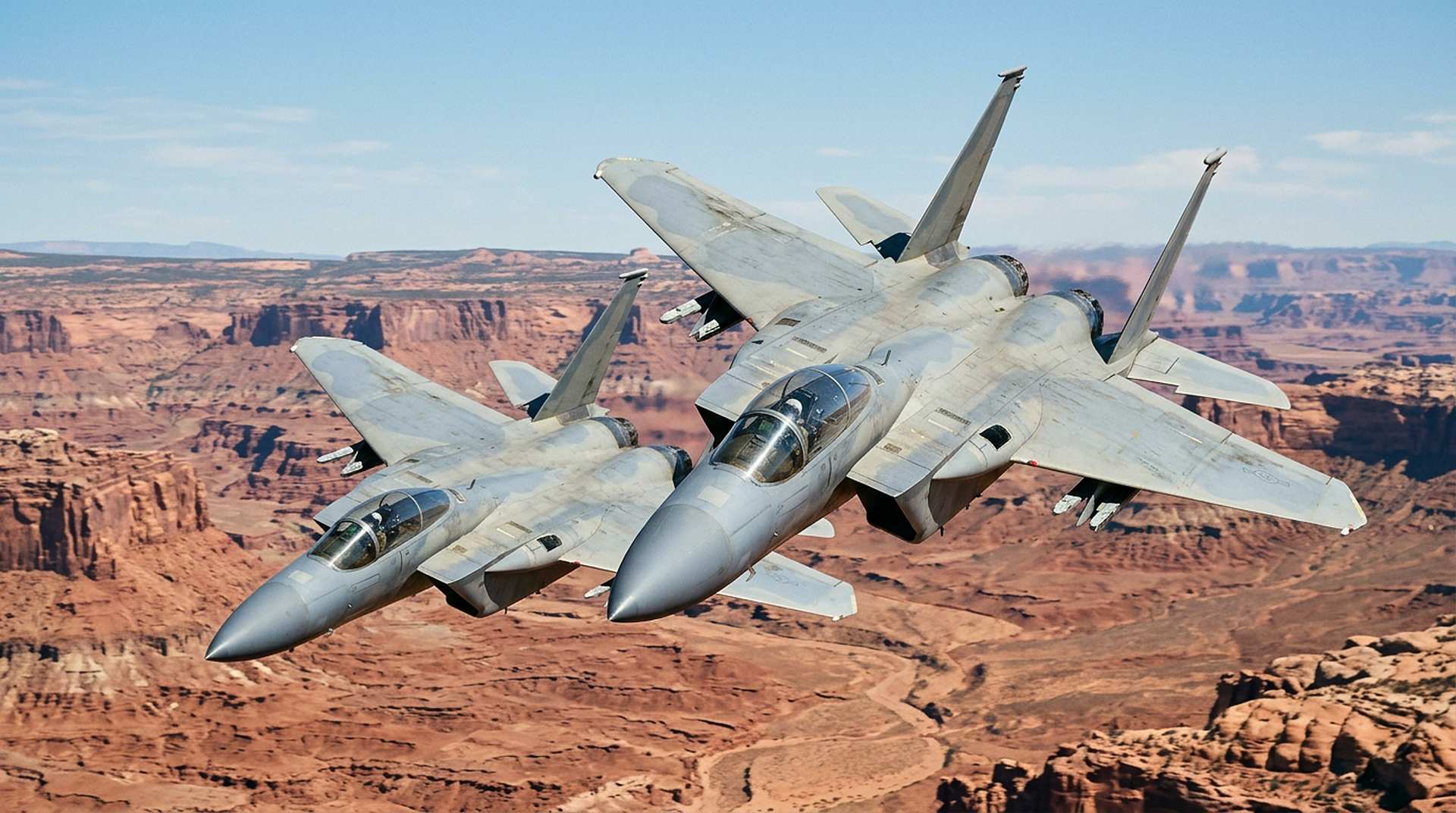
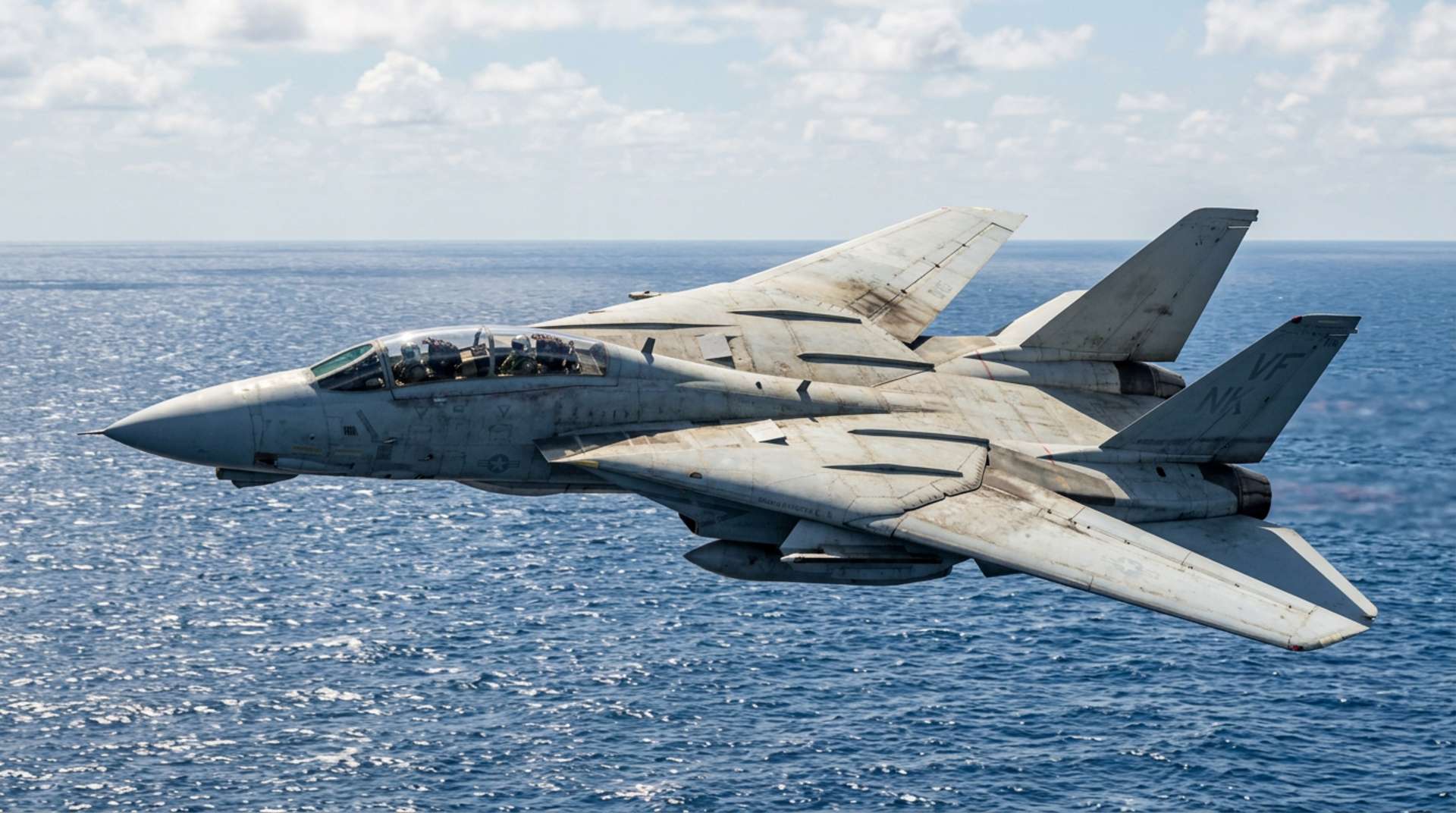
The Tomcat's weapon control system let its crew track 24 targets at a range of 314 km (195 miles) and attack six at once with AIM-54 Phoenix missiles, at over 161 km (100 miles). It also carried AIM-7 Sparrow and AIM-9 Sidewinder missiles and a 20mm cannon. A Radar Intercept Officer sat behind the pilot.
The F-15 carries a 20-mm cannon with 940 rounds and up to eight AIM-120 AMRAAMs, or a mix with AIM-9 Sidewinders. Its pulse-Doppler radar can look down at low-flying targets without being confused by ground clutter, and its controls are designed so one person can fight the aircraft.
Winner
Speed and altitude
The National Naval Aviation Museum gives the F-14D a maximum speed of 2,485 km/h (1,544 mph) at 40,000 ft and a ceiling of 16,764 m (55,000 ft).
The US Air Force lists the F-15 at 3,018 km/h (1,875 mph), which it calls Mach 2 class, with a ceiling of 19,812 metres (65,000 feet). The two speeds are not stated on the same basis, so treat the gap as indicative.
Winner
Service and successors
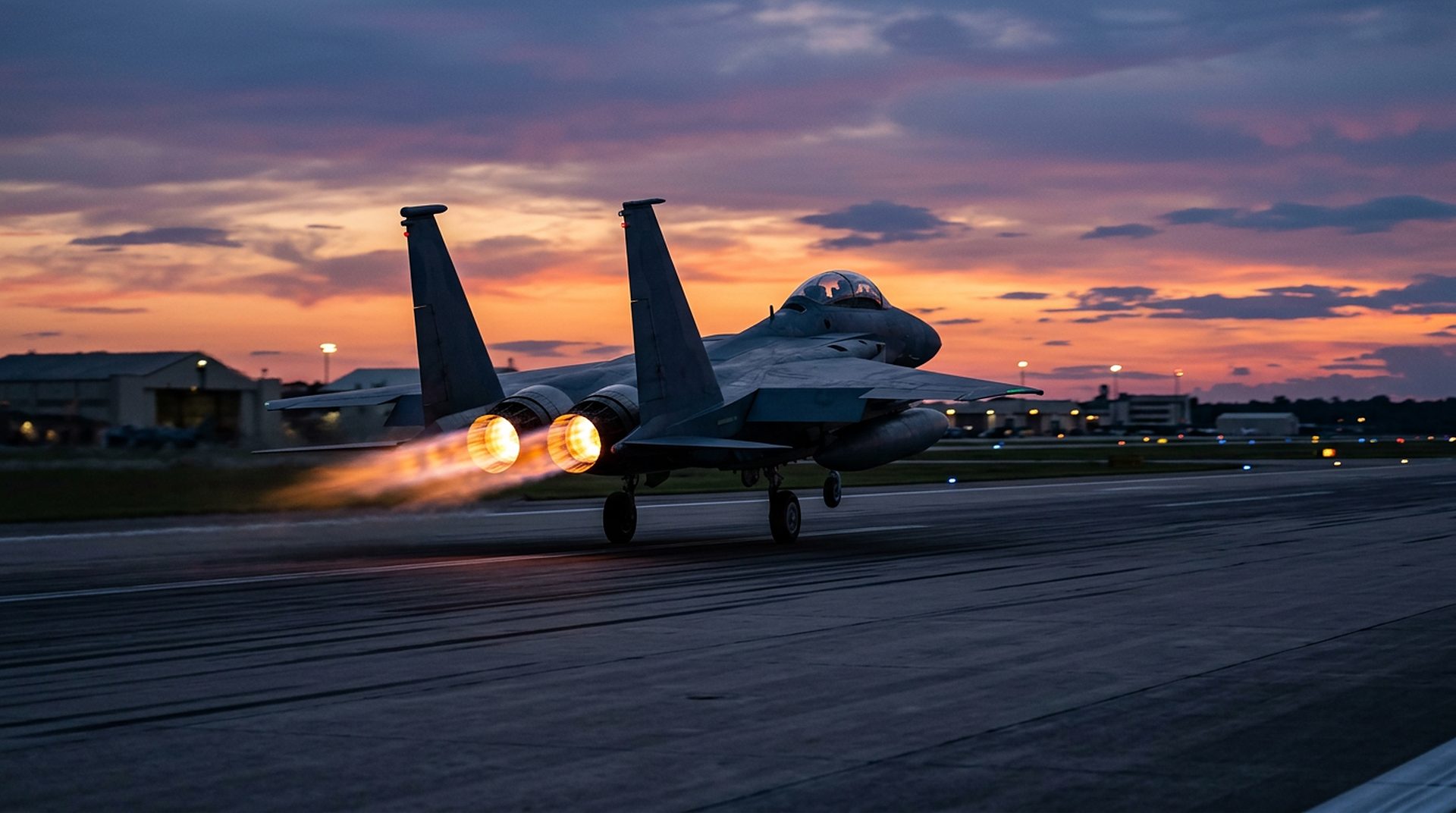
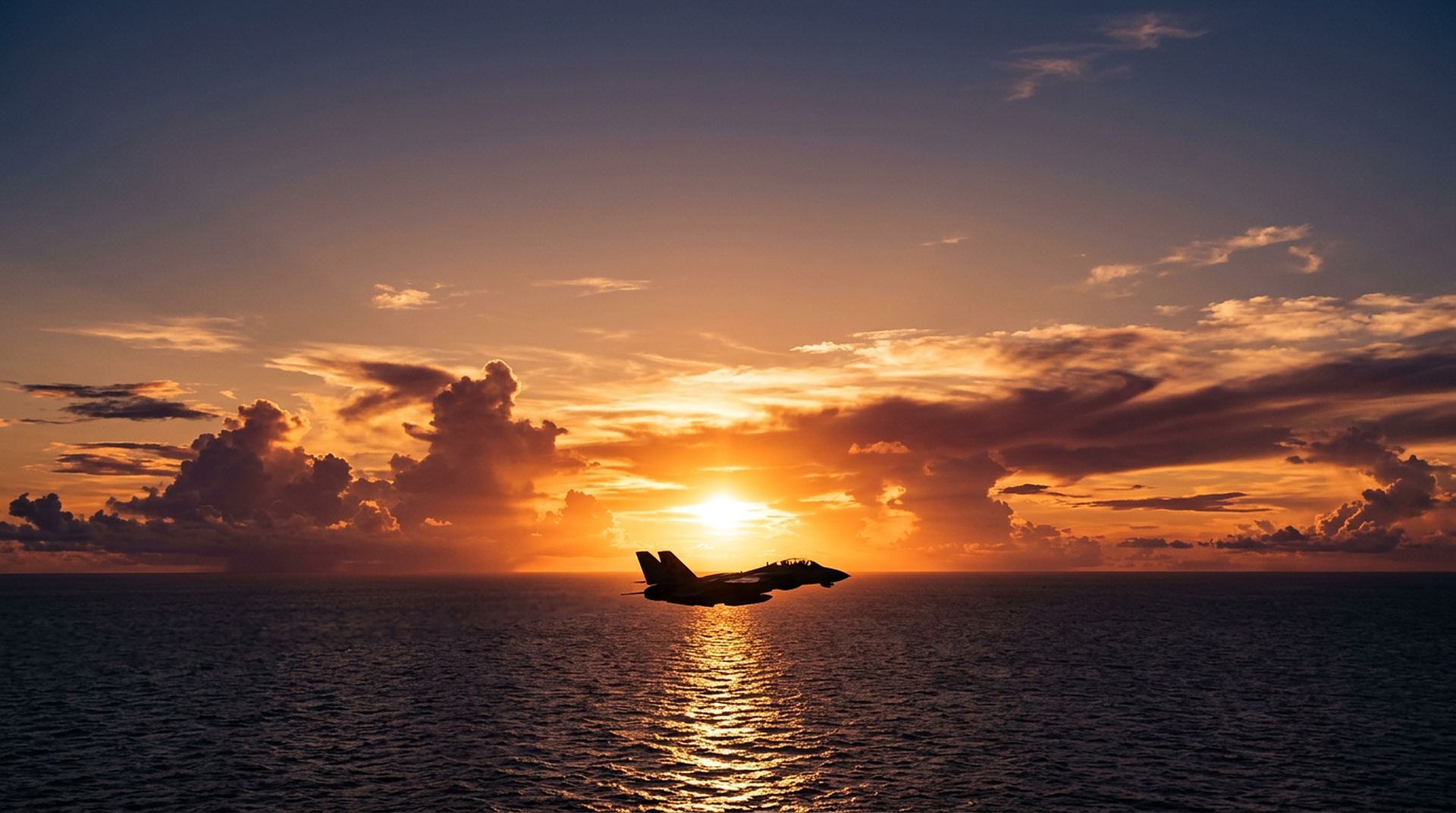
At its peak, thirty Navy squadrons flew the F-14. Its final combat mission ended on 8 February 2006, and the type retired from US Navy service that year.
The F-15 carried on. The US Air Force inventory stood at 249 as of April 2019, and the current production version is the two-seat F-15EX, which Boeing says can carry up to 12 AMRAAMs.
Winner
Two services, two requirements
The Navy’s requirement
The Navy needed a carrier-based fighter after its version of the F-111 failed to meet requirements. The F-14 paired a long-range weapon system with the Phoenix missile and a second crew member.
The Air Force’s requirement
The Air Force wanted a tactical fighter whose weapons and flight controls one person could manage in air-to-air combat, with a radar able to pick out low-flying aircraft.
What replaced the Tomcat
The F/A-18E/F Super Hornet entered US Navy fleet service in 1999 as the replacement for the F-14 Tomcat.
Can a civilian fly either aircraft?
No. The F-14 retired from US Navy service in 2006 and the F-15 is a frontline military aircraft. Jetify does not offer flights in either.
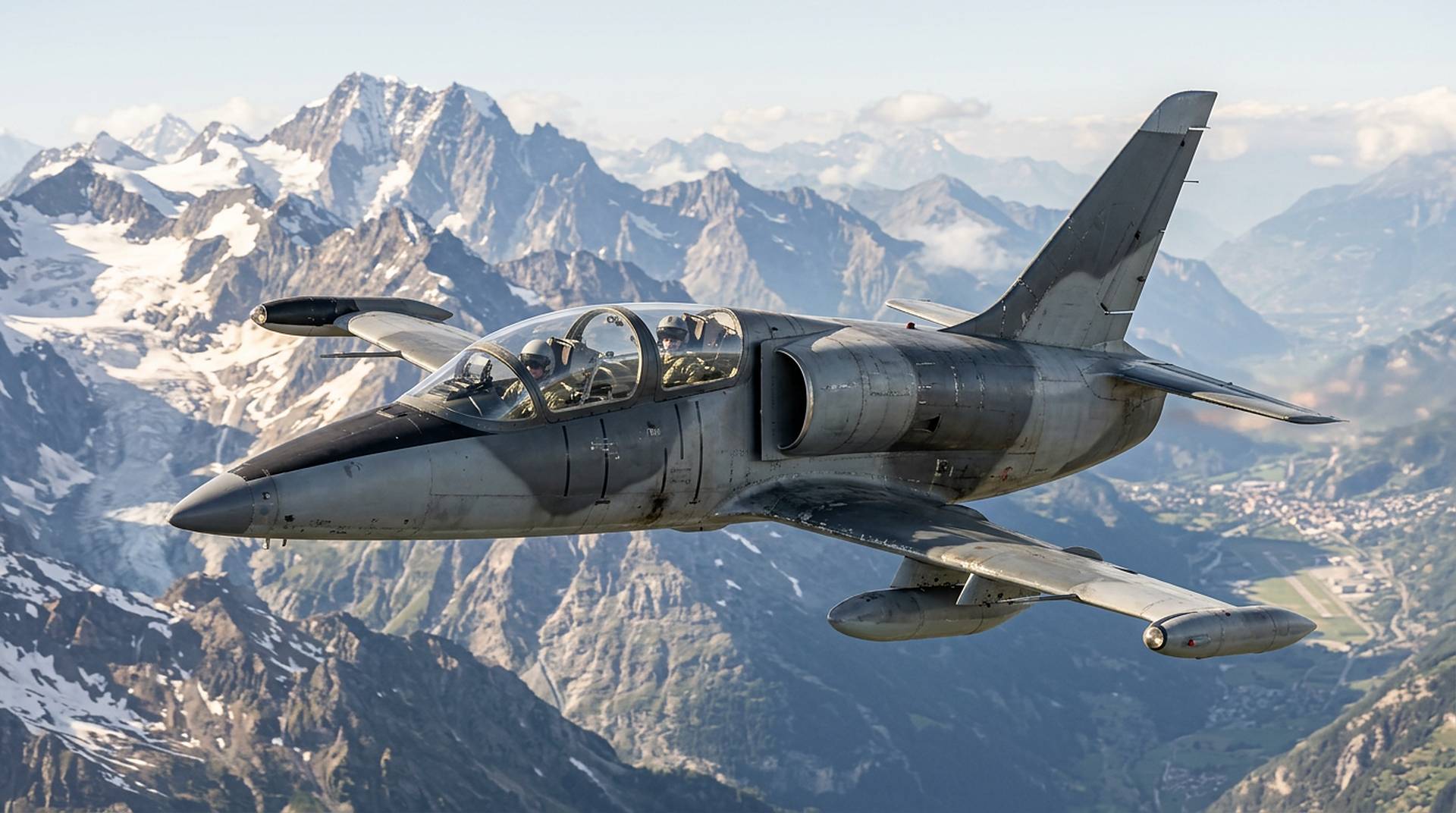
Jetify's flights use ex-military jets instead. See the fighter jet flights page for the aircraft and locations currently listed.
F-14 vs F-15 questions
Was the F-14 Tomcat better than the F-15 Eagle?
Neither the F-14 Tomcat nor the F-15 Eagle was simply better, because they were built for different jobs. The F-14 was a two-seat carrier fighter built around the long-range AIM-54 Phoenix missile. The F-15 is a land-based tactical fighter designed so one pilot can fight it alone. The F-15 is faster on published figures and is still in production.
Which is faster, the F-14 Tomcat or the F-15 Eagle?
The F-15 Eagle is faster than the F-14 Tomcat on published figures. The US Air Force lists the F-15 at 3,018 km/h (1,875 mph), and the National Naval Aviation Museum gives the F-14D 2,485 km/h (1,544 mph) at 40,000 ft. The two figures are not stated on the same basis.
When did the F-14 Tomcat retire?
The F-14 Tomcat retired from US Navy service in 2006. It flew its final combat mission on 8 February that year, and the F/A-18E/F Super Hornet replaced it.
What could the F-14 Tomcat’s Phoenix missile system do?
The F-14 Tomcat’s weapon control system could track 24 targets at 314 km (195 miles) and attack six at once with AIM-54 Phoenix missiles, at ranges over 161 km (100 miles).
Is the F-15 Eagle still in production?
Yes, the F-15 Eagle is still in production. The current production version is the two-seat F-15EX, which Boeing says can carry up to 12 AMRAAMs.
Did the F-14 Tomcat need two crew?
Yes, the F-14 Tomcat needed two crew. A Radar Intercept Officer sat behind the pilot and ran the weapon system. The F-15 Eagle, by contrast, was designed so one pilot could manage its weapons and flight controls in air-to-air combat.
Explore further
F-14 Tomcat
The Grumman F-14 Tomcat. The iconic twin-engine, variable-sweep wing maritime air superiority fighter jet.
View
F-15 Eagle
The F-15 Eagle. Undefeated in air-to-air combat with over 100 victories, this twin-engine jet remains an aerial dominance icon.
View

Best fighter jet
The four category winners across combat, speed, technology and cost
View