What Is The Hawker Hunter?
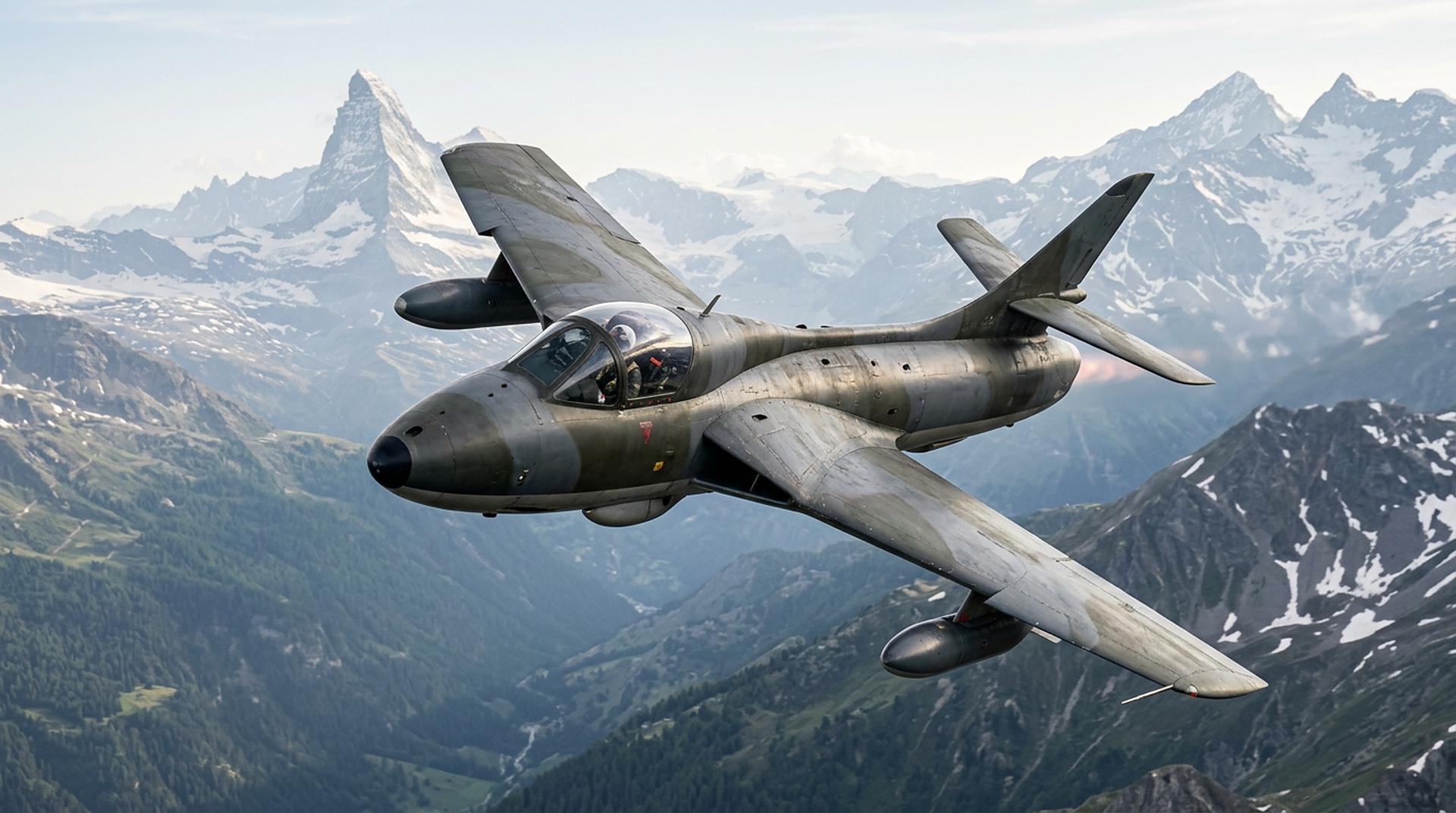
The Hawker Hunter. Swept-wing British trans-sonic jet renowned for crisp handling, long service life, and aerobatic precision.
United Kingdom
Origin
Fighter
Role
Mach 0.94
Top speed
15,240 m
Service ceiling
Hawker Hunter Specifications
The Hawker Hunter was a premier British swept-wing trans-sonic jet fighter of the 1950s. Driven by a Rolls-Royce Avon turbojet that pushed Mach 0.94, it excelled in both interceptor and ground-attack roles, and was acclaimed for extreme flight control responsiveness and four 30mm ADEN cannons.
Performance
Top speed
Mach 0.94 (715 mph)
Service ceiling
50,000 ft (15,240 m)
Combat radius
220 nmi (407 km)
Rate of climb
17,200 ft/min (87.4 m/s)
Airframe
Crew
1
Length
45 ft 11 in (14.00 m)
Wingspan
33 ft 8 in (10.26 m)
Empty weight
14,122 lbs (6,405 kg)
Engine
1x Rolls-Royce Avon 207 turbojet
Service
First flight
20 July 1951
Unit cost
$400,000 (Historical)
Operators
United Kingdom (RAF - Retired), Switzerland, India, Private Aggressors
What Weapons Does The Hawker Hunter Carry?
The Hawker Hunter is fitted with a removable nose pack housing four 30mm ADEN cannons with 600 rounds, plus four underwing pylons carrying 7,400 lbs of unguided rockets, iron bombs, and external fuel drop tanks.
Weapon
Category
Loadout
Range
ADEN Mk 4
Category
30 mm Revolver Cannon
Loadout
4 internal cannon in removable pack
Range
1,800 metres (effective)
SNEB Rocket Pod
Category
68 mm Unguided Rockets
Loadout
Up to 4 pods
Range
3 km (1.9 miles)
AIM-9 Sidewinder
Category
Short-Range Air-to-Air Missile
Loadout
Up to 4 missiles (export fits)
Range
18 km (11 miles)
1,000 lb Bomb
Category
General-Purpose Bomb
Loadout
Up to 2 bombs
Range
Gravity released
Category
Loadout
Range
Category
Loadout
Range
Category
Loadout
Range
Category
Loadout
Range
Category
Loadout
Range
Category
Loadout
Range
Category
Loadout
Range

How Fast Is The Hawker Hunter?
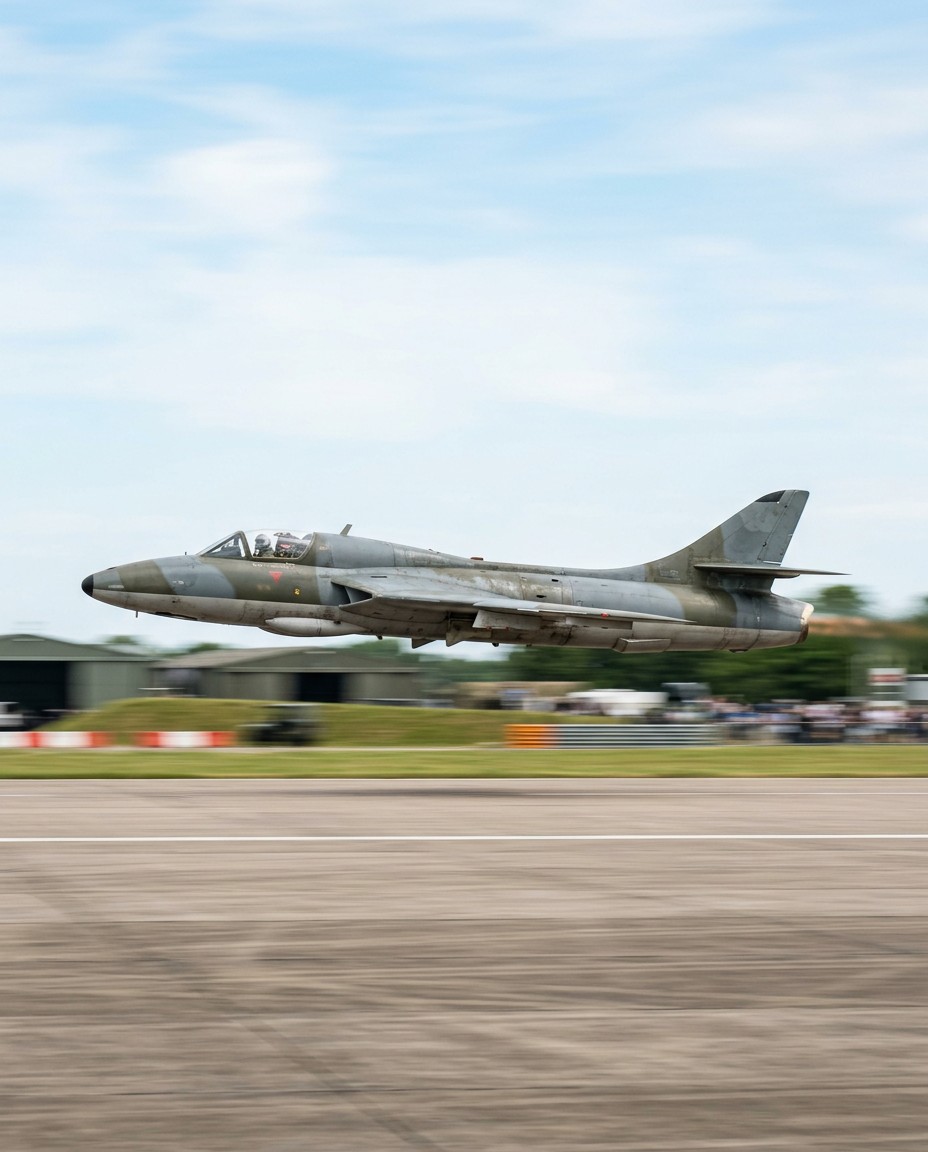
The Hunter reaches Mach 0.94, around 715 mph, and can exceed Mach 1 in a shallow dive. That makes it the fastest aircraft Jetify offers, and considerably quicker than the jet trainers that make up most of the civilian fleet. Its Avon engine and aerodynamically clean airframe give it genuine fighter performance, and it remains capable of sustained high-G manoeuvring.
How Was The Hawker Hunter Developed?
Hawker's Sydney Camm designed the Hunter to replace the Meteor, using a swept wing and the powerful Rolls-Royce Avon. The prototype flew on 20 July 1951 and a modified example set a world air speed record of 727.6 mph in 1953. Early aircraft suffered engine surge when the cannon were fired at altitude, a problem solved by modifying the gas flow.

Has The Hawker Hunter Seen Combat?
The Hunter saw combat in the 1956 Suez Crisis, the Aden Emergency, the Indo-Pakistani wars of 1965 and 1971 where Indian Hunters flew ground-attack missions, the Six-Day War with Jordan and Iraq, and the Rhodesian Bush War. Swiss Hunters served in the air defence role without ever firing in anger.
Who Operates The Hawker Hunter?
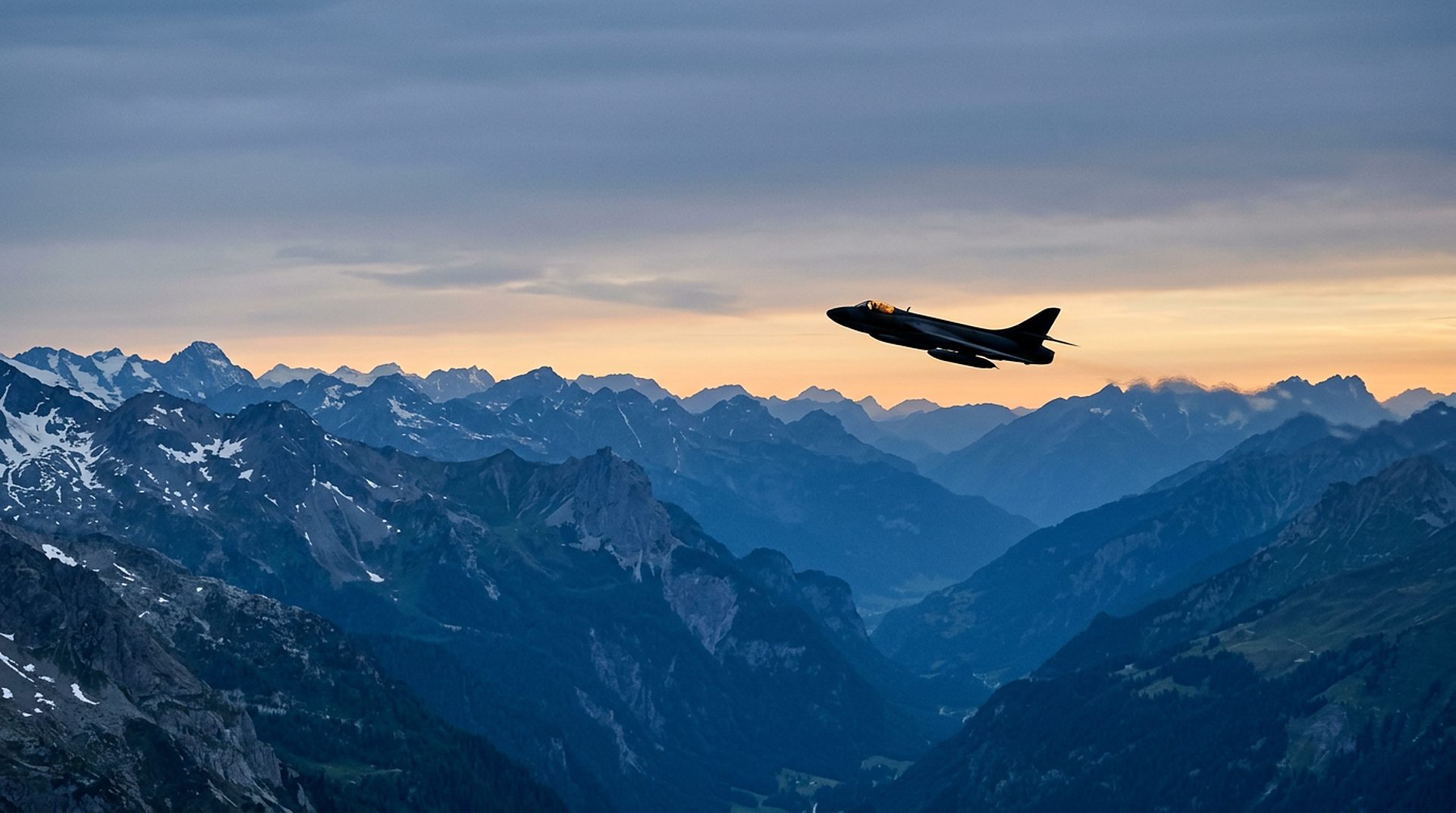
Twenty-one air forces operated the Hunter, with Switzerland retiring the last military examples in 1994. A number remain airworthy in civilian hands, and Jetify offers passenger flights in a Hunter from Sion in the Swiss Alps.
Hawker Hunter FAQs
Common questions about the Hawker Hunter, its capabilities and whether civilians can fly it.
Can I fly in the Hawker Hunter as a passenger?
Yes, you can fly as a passenger in the Hawker Hunter through Jetify, with flights from Sion in Switzerland. You fly in a two-seat example with a qualified pilot, and no licence or flying experience is required. The Hawker Hunter is one of 7 aircraft types Jetify offers from 11 airfields in 7 countries.
Can I take the controls of the Hawker Hunter?
Yes, in most cases you can take the controls of the Hawker Hunter. It has dual controls, and pilots routinely hand over in level flight and gentle turns once satisfied you are comfortable. Takeoff, landing and low-level flying stay with the pilot.
How much does a Hawker Hunter flight cost?
A Hawker Hunter flight with Jetify starts from around £6,400, $8,500 or €7,600 per person, flying from Sion in Switzerland. The price includes ground school, flight suit, helmet and pre-flight medical screening. The Hawker Hunter is the fastest aircraft currently bookable, and prices depend on the aircraft and location, with L-39 Albatros flights starting from around £2,500, $3,300 or €2,900.
Is there a weight or height limit to fly in the Hawker Hunter?
Yes, a flight in the Hawker Hunter has strict height and weight limits, set by ejection seat clearances, cockpit dimensions and harness fit. Across jet experiences, height is typically 5ft 2in (157 cm) to 6ft 4in (193 cm), and weight is generally capped at 16 st 7 lb to 18 st 12 lb (105 kg to 120 kg) depending on the aircraft. You also need normal cardiovascular health, with no heart conditions, severe high blood pressure or recent surgery.
How much G-force will I feel in the Hawker Hunter?
The G-force you feel in the Hawker Hunter depends on the profile you agree with your pilot: on civilian jet experiences, aerobatic profiles typically reach four to eight positive G in sustained turns and around minus four negative G. You learn the anti-G straining manoeuvre in ground school, which keeps you conscious under load, and the profile can be adjusted at any point.
How far in advance should I book a Hawker Hunter flight?
Book a Hawker Hunter flight 2 to 4 months in advance, because limited aircraft availability, maintenance schedules and airspace clearances restrict slots on real ex-military jet experiences. For weekend slots in peak summer months, allow 6 months. Simulator experiences generally need 2 to 3 weeks’ notice for standard weekend bookings.
Explore the database