What Is The Concorde?
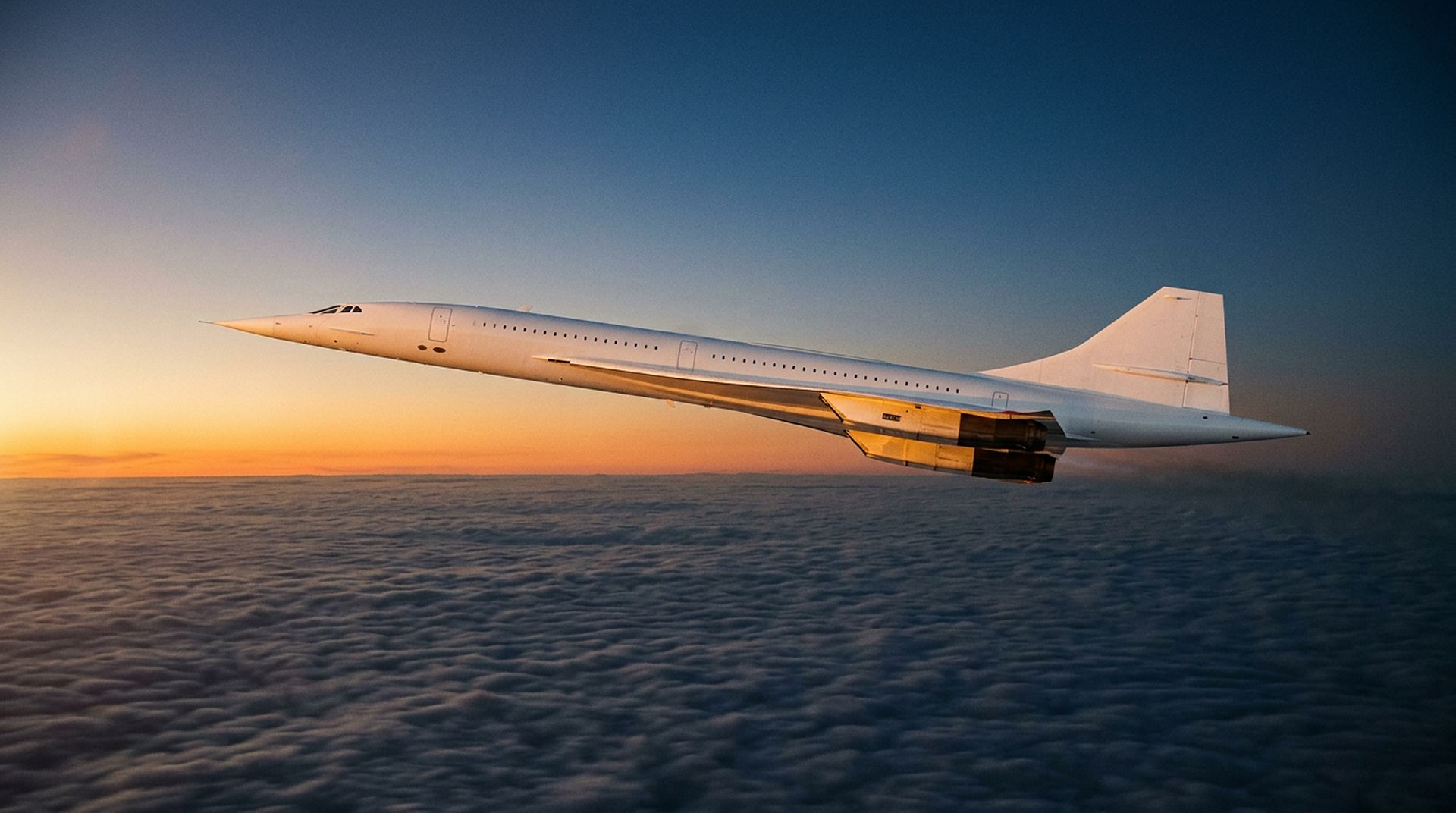
The Concorde. Supersonic passenger airliner that cruised at Mach 2.04, offering luxury trans-Atlantic travel above 60,000 feet.
UK / France
Origin
Supersonic airliner
Role
Mach 2.04
Top speed
18,300 m
Service ceiling
Concorde Specifications
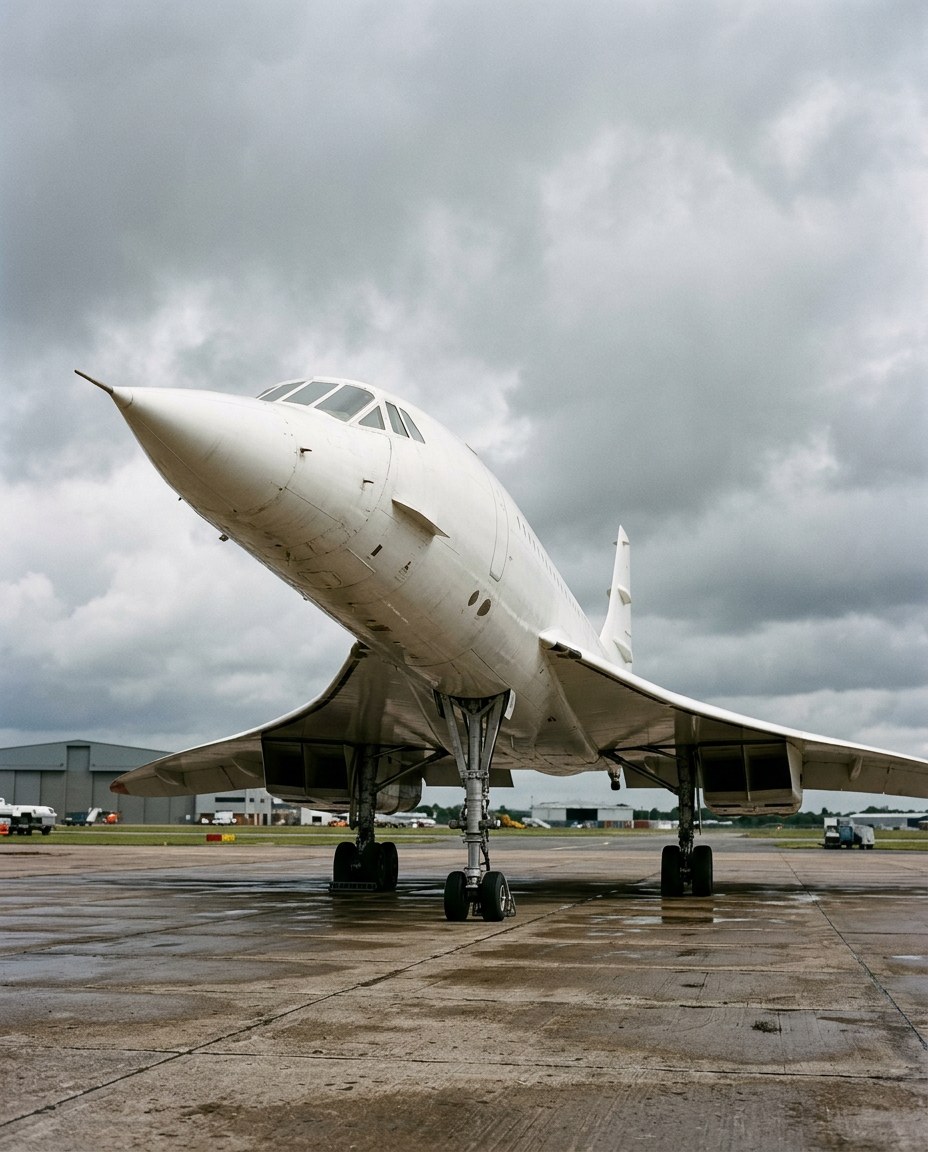
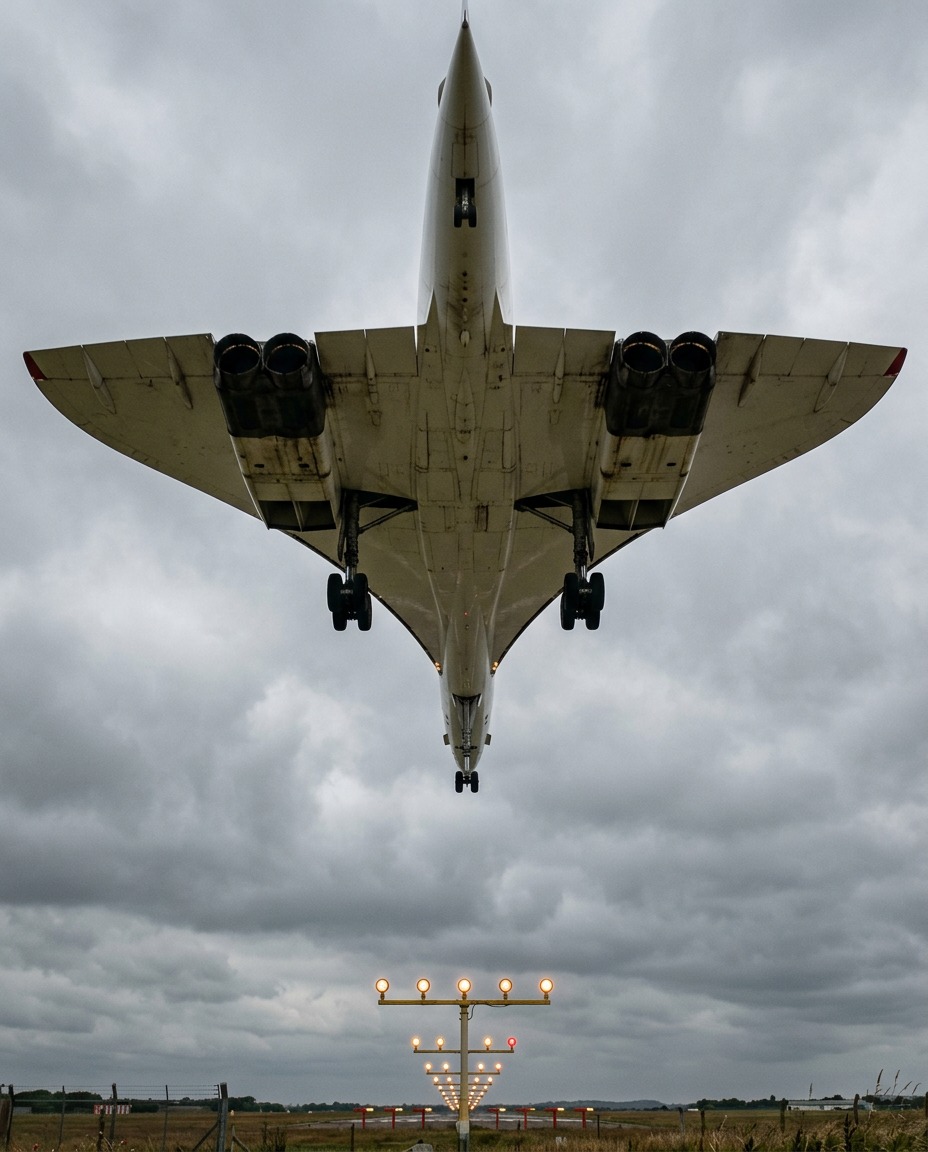
The Aérospatiale/BAC Concorde was a supersonic passenger airliner, cruising at Mach 2.04 (1,354 mph) above 60,000 feet. Powered by four Olympus 593 turbojets with reheat, its slender delta wing and droop nose enabled trans-Atlantic commercial flights between London/Paris and New York.
Performance
Top speed
Mach 2.04 (1,354 mph)
Service ceiling
60,000 ft (18,300 m)
Combat radius
3,740 nmi (6,926 km) [Range]
Rate of climb
5,000 ft/min (25.4 m/s)
Airframe
Crew
3 (2 Pilots, Flight Engineer)
Length
203 ft 9 in (62.10 m)
Wingspan
83 ft 10 in (25.56 m)
Empty weight
173,500 lbs (78,700 kg)
Engine
4x Rolls-Royce/SNECMA Olympus 593 Mk 610 turbojets with reheat
Service
First flight
2 March 1969
Unit cost
$46 million (1977 USD/~$160M inflation adjusted)
Operators
Air France, British Airways (Civilian - Retired)
What Weapons Does The Concorde Carry?
As it is a completely unarmed civilian commercial airliner designed exclusively for high-altitude supersonic passenger transport between North America and Europe, the Concorde carries zero combat hardpoints.
Weapon
Category
Loadout
Range
Passenger Cabin
Category
Commercial Payload
Loadout
100 seats typical (128 maximum)
Range
Transatlantic
Olympus 593
Category
Afterburning Turbojet
Loadout
4 engines
Range
Supercruise at Mach 2.02
Droop Nose
Category
Variable Geometry Nose
Loadout
1 unit
Range
Visibility during approach
Category
Loadout
Range
Category
Loadout
Range
Category
Loadout
Range
Category
Loadout
Range
Category
Loadout
Range
Category
Loadout
Range
Category
Loadout
Range
Category
Loadout
Range
How Fast Is The Concorde?
Concorde cruised at Mach 2.04, around 1,354 mph, and is the fastest passenger aircraft ever to enter commercial service. It crossed the Atlantic in under three hours, roughly half the time of a subsonic airliner, and the record New York to London flight took 2 hours 52 minutes. Airframe skin temperatures reached 127°C in cruise, stretching the fuselage by around 25 centimetres in flight.
How Was The Concorde Developed?
Britain and France signed a treaty in 1962 to share development costs, an agreement with no break clause that effectively made cancellation impossible. The prototype flew on 2 March 1969, and commercial service began in January 1976. Only twenty airframes were built, of which fourteen entered airline service.
Has The Concorde Seen Combat?
Concorde was a civil aircraft and never saw combat. Its operational challenges were commercial and political: sonic boom restrictions banned supersonic flight over land in the United States, limiting viable routes to transatlantic services.
Who Operates The Concorde?
British Airways and Air France were the only operators. The type was retired in October 2003 following the Paris crash of Air France 4590 in 2000, declining passenger numbers after 2001, and Airbus ending maintenance support.
Concorde FAQs
Common questions about the Concorde, its capabilities and whether civilians can fly it.
Can I fly in Concorde as a civilian?
No, Concorde is not available for civilian passenger flights. Jetify offers flights in ex-military aircraft that have been demilitarised and placed on a civil register, such as the L-39 Albatros, Hawker Hunter and MiG-15 Fagot, across 7 aircraft types from 11 airfields in 7 countries.
Can I take the controls of Concorde?
No, you cannot take the controls of Concorde, because it is not available for civilian passenger flights. On the aircraft Jetify does operate, such as the L-39 Albatros, most allow you to take the controls in level flight and gentle turns once your pilot is satisfied you are comfortable.
How much does a flight in Concorde cost?
Concorde is not available for civilian passenger flights, so there is no price for a flight in one. Jetify flights in jets such as the L-39 Albatros start from around £2,500, $3,300 or €2,900, while the MiG-15 Fagot, Aermacchi S.211 and Lockheed T-33 start from around £2,800 ($3,800, €3,400). The Hawker Hunter, the fastest aircraft currently bookable, starts from around £6,400, $8,500 or €7,600. Every price is per person and includes ground school, flight suit, helmet and pre-flight medical screening.
Is there a weight or height limit for a jet flight instead of Concorde?
Concorde is not available for civilian passenger flights, but all jet flight experiences enforce strict height and weight limits set by ejection seat clearances, cockpit dimensions and harness fit. Height is typically 5ft 2in (157 cm) to 6ft 4in (193 cm), and weight is generally capped at 16 st 7 lb to 18 st 12 lb (105 kg to 120 kg) depending on the aircraft. You also need normal cardiovascular health, with no heart conditions, severe high blood pressure or recent surgery.
How much G-force would I feel on a jet flight instead of Concorde?
Concorde is not available for civilian passenger flights, but on a civilian jet experience aerobatic profiles typically reach four to eight positive G in sustained turns and around minus four negative G. You learn the anti-G straining manoeuvre in ground school, which keeps you conscious under load. Supersonic and high-altitude profiles are physically far easier, and what happens in the air is agreed with your pilot and can be adjusted at any point.
How far in advance should I book a jet flight instead of Concorde?
Concorde is not available for civilian passenger flights, but you should book a real ex-military jet experience, such as the L-39 Albatros, 2 to 4 months in advance because of limited aircraft availability, maintenance schedules and airspace clearances. For weekend slots in peak summer months, allow 6 months. Simulator experiences generally need 2 to 3 weeks’ notice for standard weekend bookings.

Explore the database