What Is The SR-71 Blackbird?
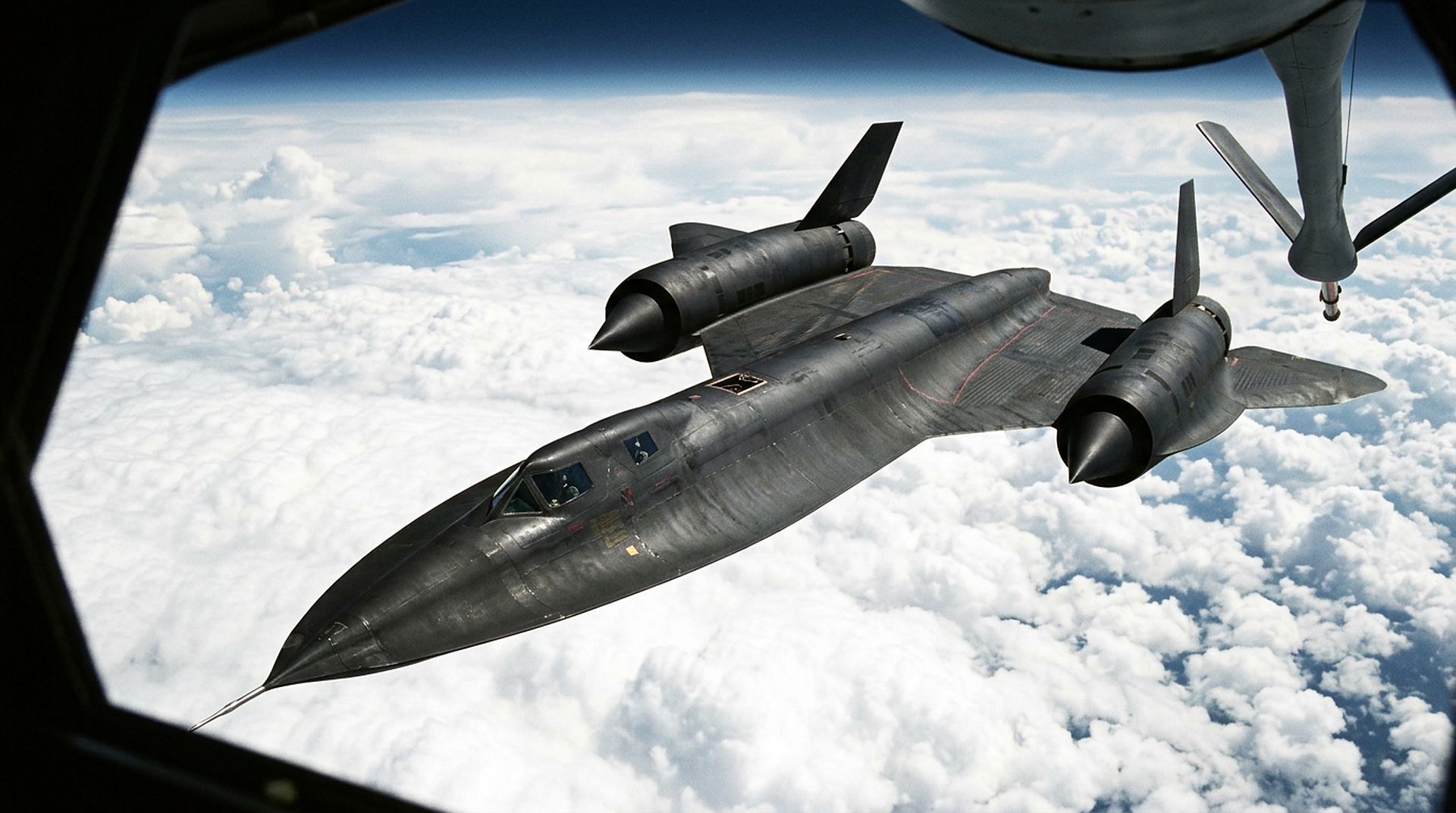
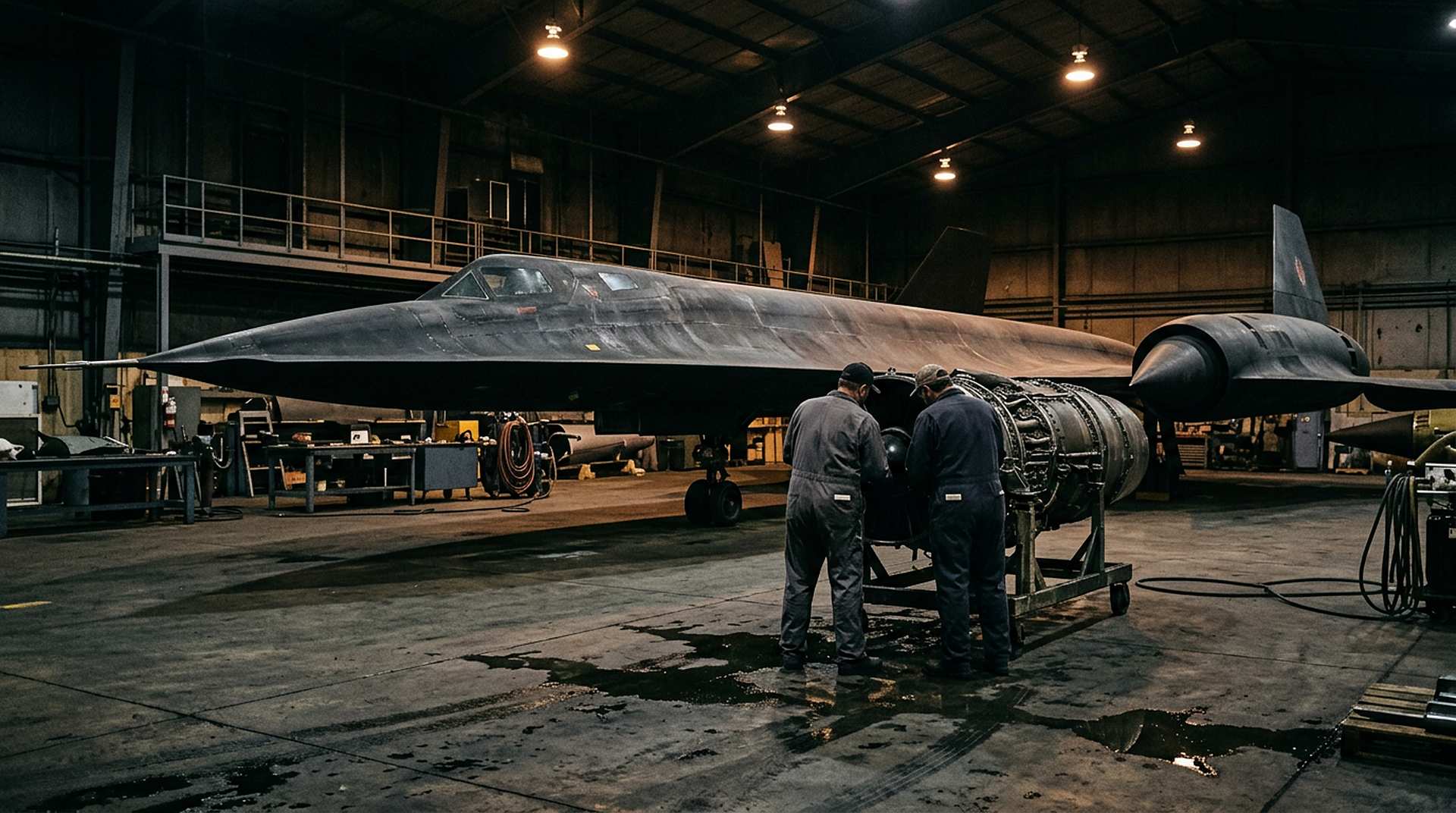
The Lockheed SR-71 Blackbird. An iconic Mach 3+ Cold War reconnaissance aircraft renowned for record-breaking high-altitude speed.
United States
Origin
Strategic recon
Role
Mach 3.3
Top speed
25,900 m
Service ceiling
SR-71 Blackbird Specifications
The Lockheed SR-71 Blackbird is a long-range, high-altitude strategic reconnaissance aircraft engineered by Lockheed’s Skunk Works division. Operating at speeds exceeding Mach 3 and extreme altitudes, the aircraft relies on its heat-resistant titanium construction, and advanced radar-evasion geometry to safely conduct intelligence missions over hostile airspaces.
Performance
Top speed
Mach 3.3/2,200+ mph/3,540 km/h
Service ceiling
85,000 ft/25,900 metres
Combat radius
1,050 nautical miles/1,200 miles/1,930 km (without aerial refuelling)
Rate of climb
11,820 ft/min/60 m/s
Airframe
Crew
2 (Pilot and Reconnaissance Systems Operator/RSO)
Length
107 ft 5 in/32.74 metres
Wingspan
55 ft 7 in/16.94 metres
Empty weight
60,000 lbs/27,216 kg
Engine
2 × Pratt & Whitney J58 (JT11D-20) continuous-bleed afterburning turbojets
Service
First flight
22 December 1964
Unit cost
Approximately $33 million USD per aircraft (estimated flyaway cost during production in 1960s currency)
Operators
United States Air Force (USAF), National Aeronautics and Space Administration (NASA)
What Weapons Does The SR-71 Blackbird Carry?
The Lockheed SR-71 Blackbird carried zero offensive or defensive weaponry, operating entirely as an unarmed strategic reconnaissance platform (19FortyFive, 2026; National Museum of the USAF, n.d.). Instead of ordnance, its payload bay and interchangeable nose sections housed sophisticated optical, infrared, and radar intelligence-gathering systems designed to map vast regions of enemy terrain at high speeds
Weapon
Category
Loadout
Range
None
Category
N/A (Unarmed Reconnaissance Platform)
Loadout
0
Range
N/A
Category
Loadout
Range
Category
Loadout
Range
Category
Loadout
Range
Category
Loadout
Range
Category
Loadout
Range
Category
Loadout
Range
Category
Loadout
Range
Category
Loadout
Range
Category
Loadout
Range
Category
Loadout
Range
How Fast Is The SR-71 Blackbird?
The SR-71 Blackbird remains the fastest air-breathing manned operational aircraft ever built, setting an official absolute speed record of Mach 3.2 (2,193 mph/3,529 km/h) in July 1976. During standard operational missions, pilots routinely cruised at Mach 3.2, occasionally pushing the airframe to Mach 3.3. At these extreme velocities, atmospheric friction raised exterior surface temperatures past 300°C (570°F). The aircraft's velocity was so unmatched that standard evasive protocol against surface-to-air missiles simply required pitching flat and accelerating out of danger.

How Was The SR-71 Blackbird Developed?
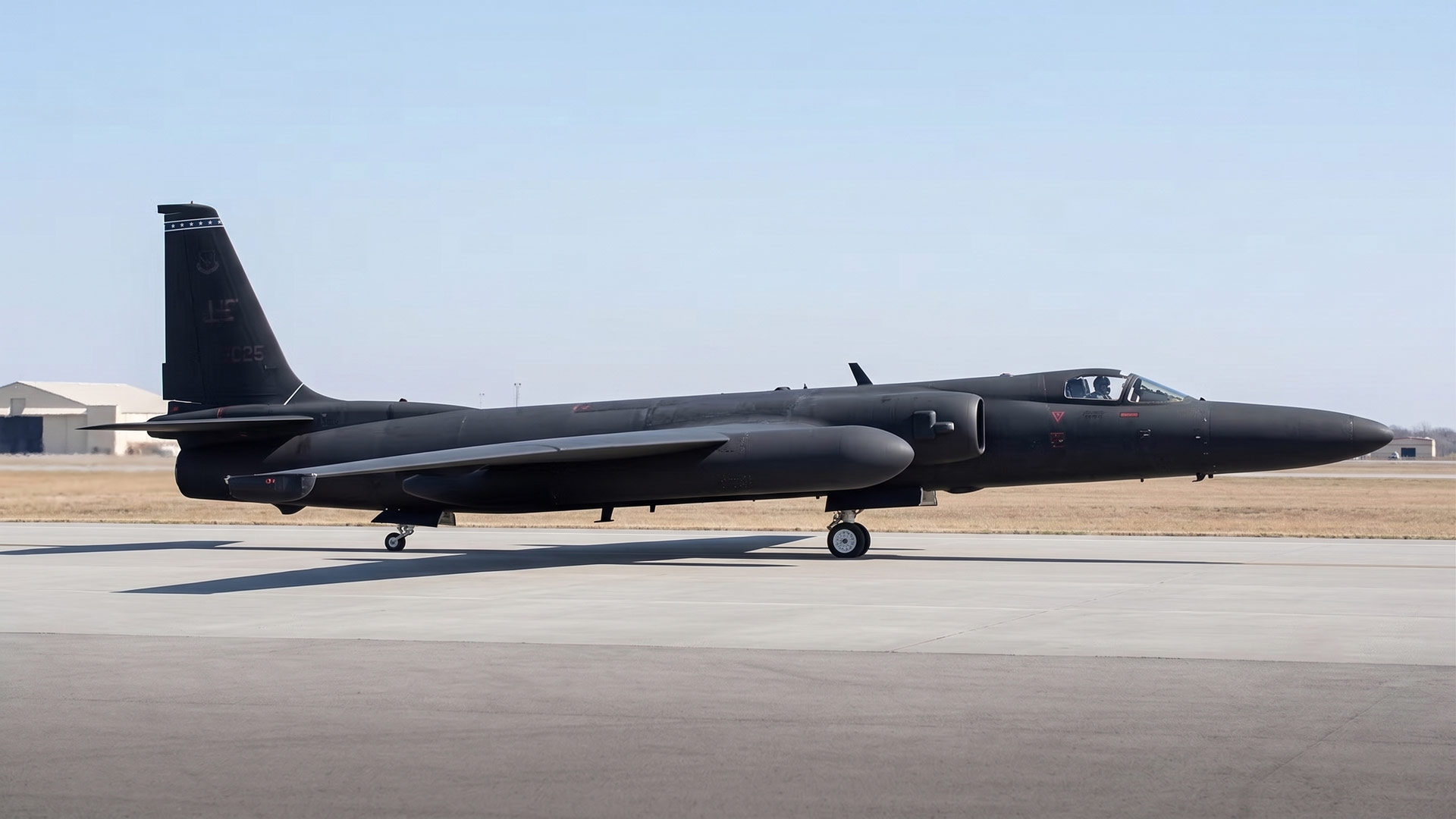
The SR-71 was developed during the height of the Cold War under strict secrecy within Lockheed’s famous 'Skunk Works' division, led by visionary aeronautical engineer Clarence "Kelly" Johnson. Following the vulnerability exposed when a CIA U-2 reconnaissance plane was shot down over the Soviet Union in 1960, the US military required an uninterceptable surveillance platform. Evolving directly from Lockheed's single-seat A-12 aircraft and the YF-12 interceptor prototype, the SR-71 was re-engineered to be larger to carry expanded sensor suites and fuel loads. The team pioneered ground-breaking manufacturing methods, incorporating radar-absorbing composite materials, chined fuselage design for early stealth features, and specialised silicon-based fuel (JP-7) designed not to ignite under the extreme thermal stresses of high-speed flight.

Has The SR-71 Blackbird Seen Combat?
While the SR-71 Blackbird never engaged in direct dogfights or offensive strike missions, it saw extensive deployment in dynamic combat zones throughout the Cold War, the Vietnam War, and international flashpoints across the Middle East and East Asia. Flying operational surveillance sorties over North Vietnam, Laos, North Korea, Libya, and Cuba, the aircraft routinely flew over heavily defended hostile airspace. Adversaries launched over 4,000 surface-to-air missiles (SAMs) in attempts to bring the Blackbird down; however, because its standard evasive tactic was simply to accelerate and outclimb the threat, not a single SR-71 was ever shot down or damaged by enemy action during its entire operational tenure.
Who Operates The SR-71 Blackbird?
The SR-71 Blackbird was exclusively operated by the United States Air Force (USAF) and the National Aeronautics and Space Administration (NASA). Introduced into USAF military service in January 1966 under the 9th Strategic Reconnaissance Wing at Beale Air Force Base, California, operational detachments were also stationed at RAF Mildenhall in the United Kingdom and Kadena Air Base in Okinawa, Japan. Following its primary military retirement by the USAF in 1990 (and a brief, partial reactivation in the mid-1990s), NASA operated the final active airframes as high-speed, high-altitude research platforms to test aeronautical concepts until the aircraft was permanently retired from all active flight duties in 1999.
SR-71 Blackbird FAQs
Common questions about the SR-71 Blackbird, its capabilities and whether civilians can fly it.
Can a civilian fly in the SR-71 Blackbird?
No, members of the public cannot fly the SR-71 Blackbird, because every SR-71 is permanently retired and housed in a museum. In service, crews were exceptionally qualified active-duty USAF pilots or Reconnaissance Systems Officers (RSOs), selected through intense screening that required thousands of logged jet hours and physical clearance equivalent to astronaut standards.
Can I take the controls of the SR-71 Blackbird?
No, you cannot take the controls of the SR-71 Blackbird, because it is no longer airworthy and no civilian experience flights exist anywhere in the world. During its operational life, only designated pressure-suited USAF crews and NASA test pilots flew it, due to its extreme flight envelope and complex handling at Mach 3+.
How much does a flight in the SR-71 Blackbird cost?
You cannot buy a flight in the SR-71 Blackbird, because the aircraft is retired. When operational, an SR-71 flight cost the United States Air Force approximately $200,000 to $300,000 per hour (over £500,000 per hour today), due to its specialised JP-7 fuel, aerial refuelling tanker support and demanding maintenance. Jetify flights in jets such as the L-39 Albatros start from around £2,500, $3,300 or €2,900.
Was there a weight or height limit for SR-71 Blackbird crews?
Yes, SR-71 Blackbird crews faced strict physical limits set by the cockpit dimensions and the David Clark full-pressure suit needed for high-altitude survival. Crew members generally had to be between 5 ft 7 in (170 cm) and 6 ft 1 in (185 cm) tall, with strict weight caps for safe clearance in the Martin-Baker ejection seats and custom-fitted suits.
How much G-force did the SR-71 Blackbird pull?
SR-71 Blackbird crews felt relatively moderate sustained G-forces, typically 1.5G to 2.5G, on high-altitude reconnaissance missions, because banking turns at Mach 3 needed turn radiuses spanning entire countries. In hard emergency evasive manoeuvres or aggressive climbs, the airframe was rated to withstand up to 3.5G to 4G.
How far in advance should I book to see the SR-71 Blackbird?
You cannot book a flight in the SR-71 Blackbird, as the fleet is fully retired, but you can see one on static display at museums such as the Imperial War Museum Duxford in the UK or the National Air and Space Museum in the US. These rarely need booking months ahead, though buying entry tickets 1 to 2 weeks early is recommended for peak dates.

Explore the database