What Is The JF-17 Thunder?
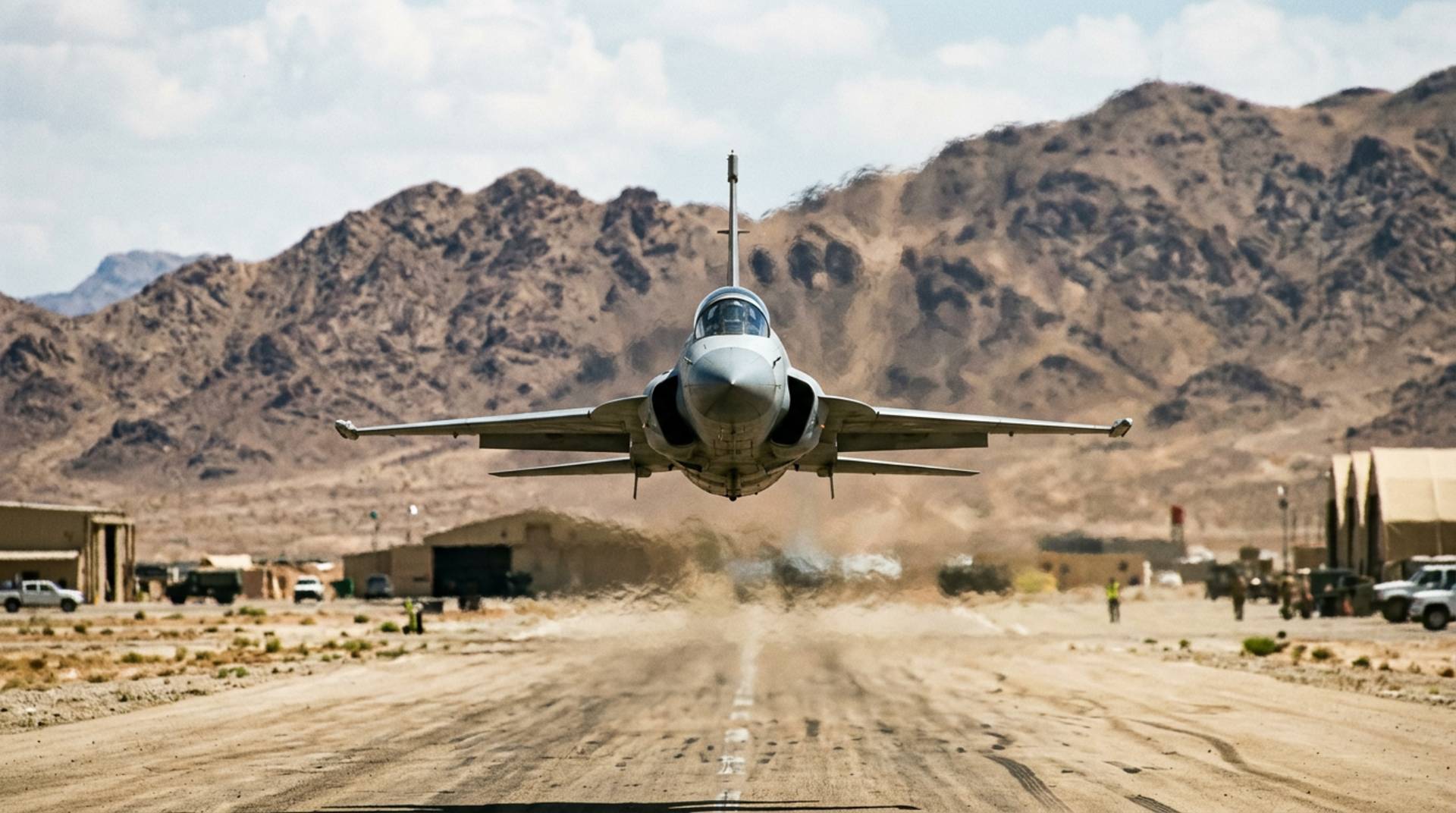
The JF-17 Thunder. Lightweight multirole combat aircraft co-developed by Pakistan and China for cost-effective air defence.
Pakistan / China
Origin
Multirole
Role
Mach 1.6
Top speed
16,920 m
Service ceiling
JF-17 Thunder Specifications
Co-developed by Pakistan and China, the JF-17 Thunder is a lightweight and cost-effective multirole fighter. Powered by a Klimov RD-93 or WS-13 engine hitting Mach 1.6, it incorporates a diverterless supersonic inlet (DSI), digital fly-by-wire flight controls, and precision missile payloads.
Performance
Top speed
Mach 1.6 (1,200 mph)
Service ceiling
55,500 ft (16,920 m)
Combat radius
485 nmi (900 km)
Rate of climb
30,000 ft/min (152 m/s)
Airframe
Crew
1
Length
47 ft 0 in (14.32 m)
Wingspan
31 ft 0 in (9.45 m)
Empty weight
14,520 lbs (6,586 kg)
Engine
1x Klimov RD-93 or AECC WS-13 afterburning turbofan
Service
First flight
25 August 2003
Unit cost
$25 - $32 million
Operators
Pakistan (PAF), Myanmar, Nigeria
What Weapons Does The JF-17 Thunder Carry?
The JF-17 is armed with an internal 23mm GSh-23-2 cannon and seven hardpoints carrying 8,400 lbs of payload, including PL-5E infrared, SD-10 BVR air-to-air missiles, and C-802AK anti-ship missiles.
Weapon
Category
Loadout
Range
GSh-23-2
Category
23 mm Twin-Barrel Cannon
Loadout
1 internal cannon
Range
2,000 metres (effective)
PL-15E
Category
Beyond-Visual-Range Missile
Loadout
Up to 4 missiles
Range
145 km (90 miles)
PL-10
Category
Short-Range Air-to-Air Missile
Loadout
Up to 2 missiles
Range
20 km (12.4 miles)
CM-400AKG
Category
Anti-Ship Missile
Loadout
Up to 2 missiles
Range
240 km (149 miles)
LS-6
Category
Precision-Guided Bomb
Loadout
Up to 4 bombs
Range
60 km (37 miles)
Category
Loadout
Range
Category
Loadout
Range
Category
Loadout
Range
Category
Loadout
Range
Category
Loadout
Range
Category
Loadout
Range
How Fast Is The JF-17 Thunder?
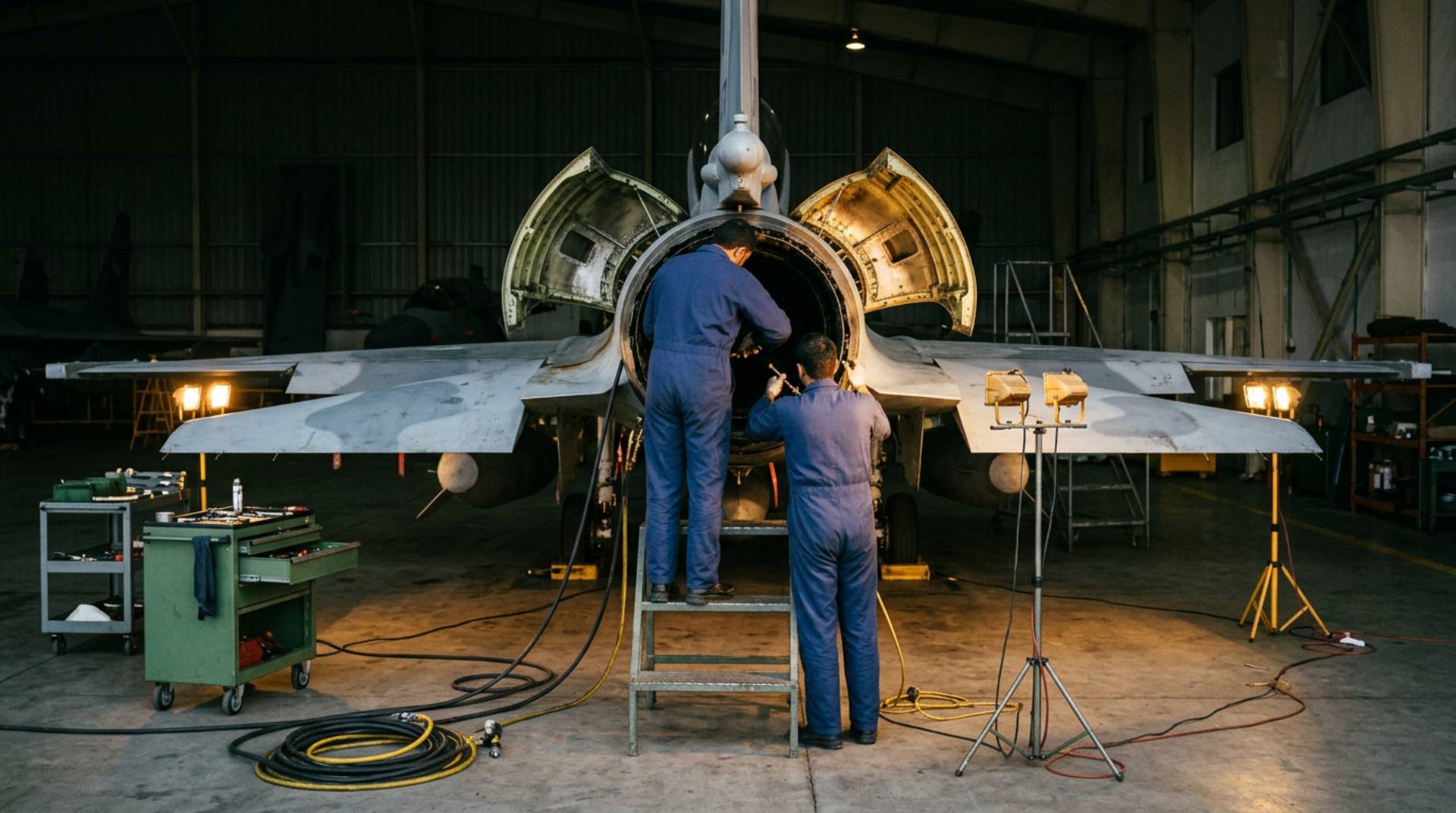
The JF-17 reaches Mach 1.6, around 1,190 mph. It is built to be affordable rather than exceptional: a single Russian-designed engine, conventional aerodynamics and a modest radar in early blocks. Later Block III aircraft added an AESA radar and helmet-mounted sight, closing much of the capability gap with far more expensive fighters.
How Was The JF-17 Thunder Developed?
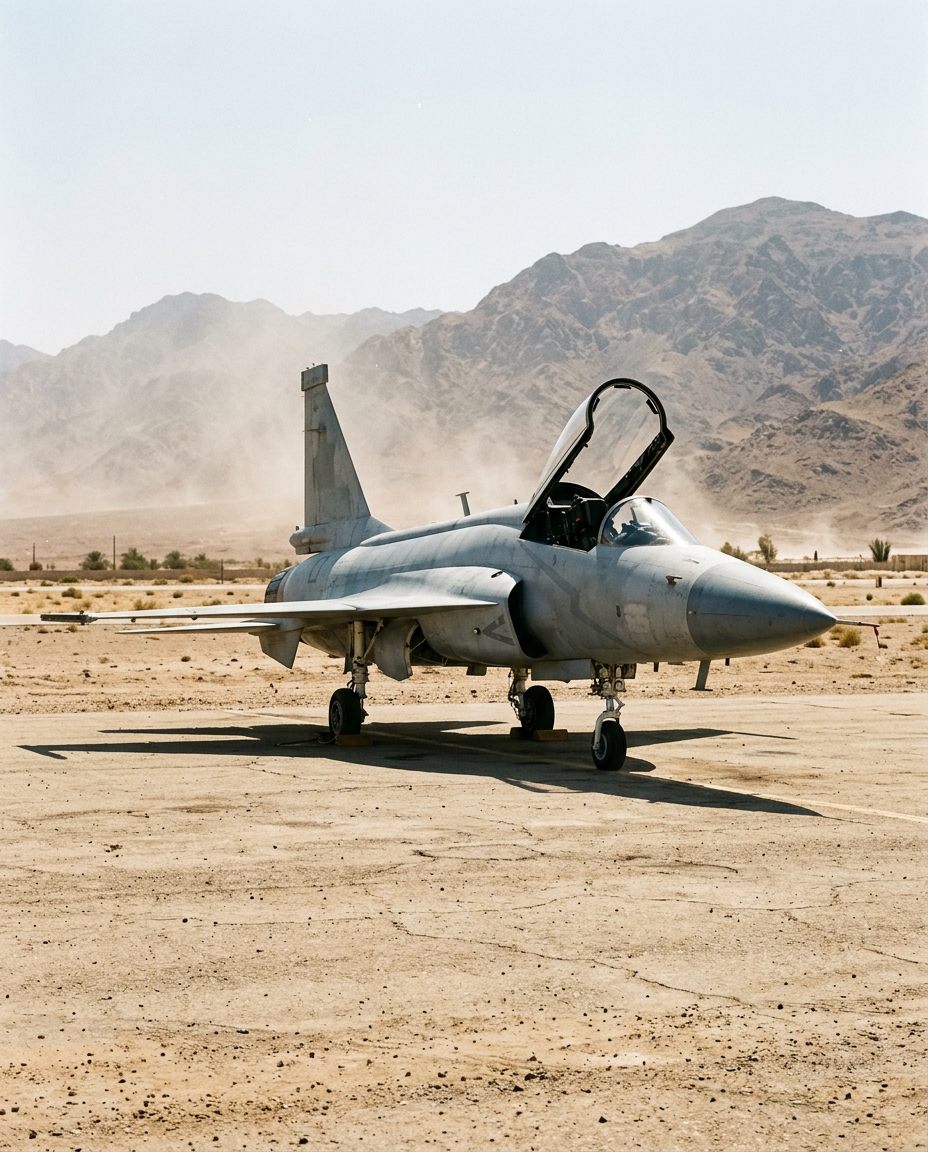
The programme began in 1999 as a joint venture between Pakistan Aeronautical Complex and Chengdu, intended to give Pakistan a fighter it could build domestically and afford in numbers. The prototype flew on 25 August 2003. Around 58 percent of the airframe is manufactured in Pakistan.
Has The JF-17 Thunder Seen Combat?
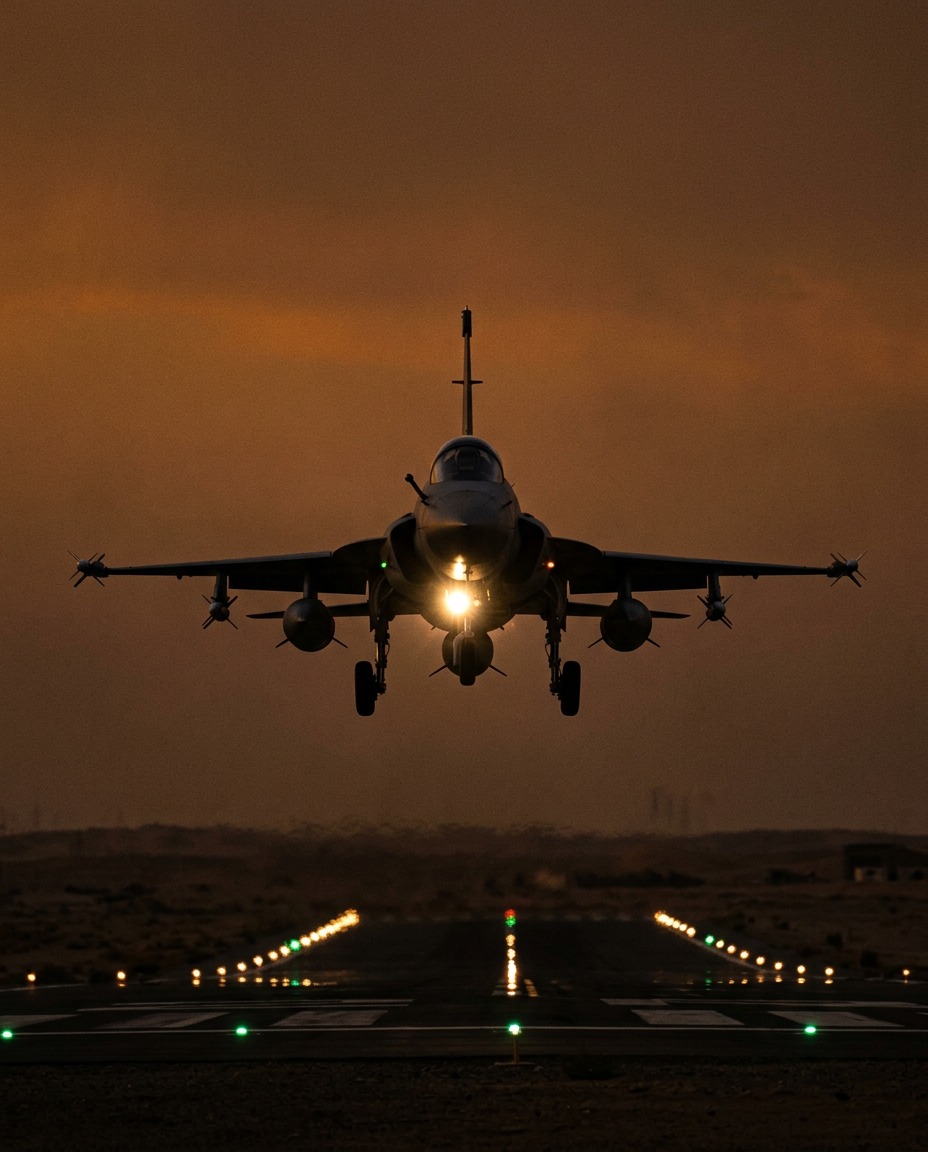
Pakistani JF-17s have flown strike missions against militants in the tribal areas and were involved in the February 2019 clashes with India. They have been used operationally in Myanmar and Nigeria against insurgent groups.
Who Operates The JF-17 Thunder?
Pakistan operates the large majority of the fleet, with Myanmar, Nigeria, Azerbaijan and Iraq as export customers. Production continues, and the type is Pakistan's principal front-line fighter alongside its F-16s.
JF-17 Thunder FAQs
Common questions about the JF-17 Thunder, its capabilities and whether civilians can fly it.
Can I fly in the JF-17 Thunder as a civilian?
No, the JF-17 Thunder is not available for civilian passenger flights. Jetify offers flights in ex-military aircraft that have been demilitarised and placed on a civil register, such as the L-39 Albatros, Hawker Hunter and MiG-15 Fagot, across 7 aircraft types from 11 airfields in 7 countries.
Can I take the controls of the JF-17 Thunder?
No, you cannot take the controls of the JF-17 Thunder, because it is not available for civilian passenger flights. On the aircraft Jetify does operate, such as the L-39 Albatros, most allow you to take the controls in level flight and gentle turns once your pilot is satisfied you are comfortable.
How much does a flight in the JF-17 Thunder cost?
The JF-17 Thunder is not available for civilian passenger flights, so there is no price for a flight in one. Jetify flights in jets such as the L-39 Albatros start from around £2,500, $3,300 or €2,900, while the MiG-15 Fagot, Aermacchi S.211 and Lockheed T-33 start from around £2,800 ($3,800, €3,400). The Hawker Hunter, the fastest aircraft currently bookable, starts from around £6,400, $8,500 or €7,600. Every price is per person and includes ground school, flight suit, helmet and pre-flight medical screening.
Are there weight limits on a jet flight instead of the JF-17 Thunder?
The JF-17 Thunder is not available for civilian passenger flights, but all jet flight experiences enforce strict height and weight limits set by ejection seat clearances, cockpit dimensions and harness fit. Height is typically 5ft 2in (157 cm) to 6ft 4in (193 cm), and weight is generally capped at 16 st 7 lb to 18 st 12 lb (105 kg to 120 kg) depending on the aircraft. You also need normal cardiovascular health, with no heart conditions, severe high blood pressure or recent surgery.
How much G-force would I feel on a jet flight instead of the JF-17 Thunder?
The JF-17 Thunder is not available for civilian passenger flights, but on a civilian jet experience aerobatic profiles typically reach four to eight positive G in sustained turns and around minus four negative G. You learn the anti-G straining manoeuvre in ground school, which keeps you conscious under load. Supersonic and high-altitude profiles are physically far easier, and what happens in the air is agreed with your pilot and can be adjusted at any point.
How far in advance should I book a jet flight instead of the JF-17 Thunder?
The JF-17 Thunder is not available for civilian passenger flights, but you should book a real ex-military jet experience, such as the L-39 Albatros, 2 to 4 months in advance because of limited aircraft availability, maintenance schedules and airspace clearances. For weekend slots in peak summer months, allow 6 months. Simulator experiences generally need 2 to 3 weeks’ notice for standard weekend bookings.

Explore the database