Dispatch
NASA's X-59 Quiet Supersonic Jet: Its First Year of Test Flights
In its first year of flight tests, NASA's X-59 has gone supersonic and reached Mach 1.53, ahead of tests of its quiet 'thump'.
Loui Chen
November 13, 2026
12
min read

Illustration
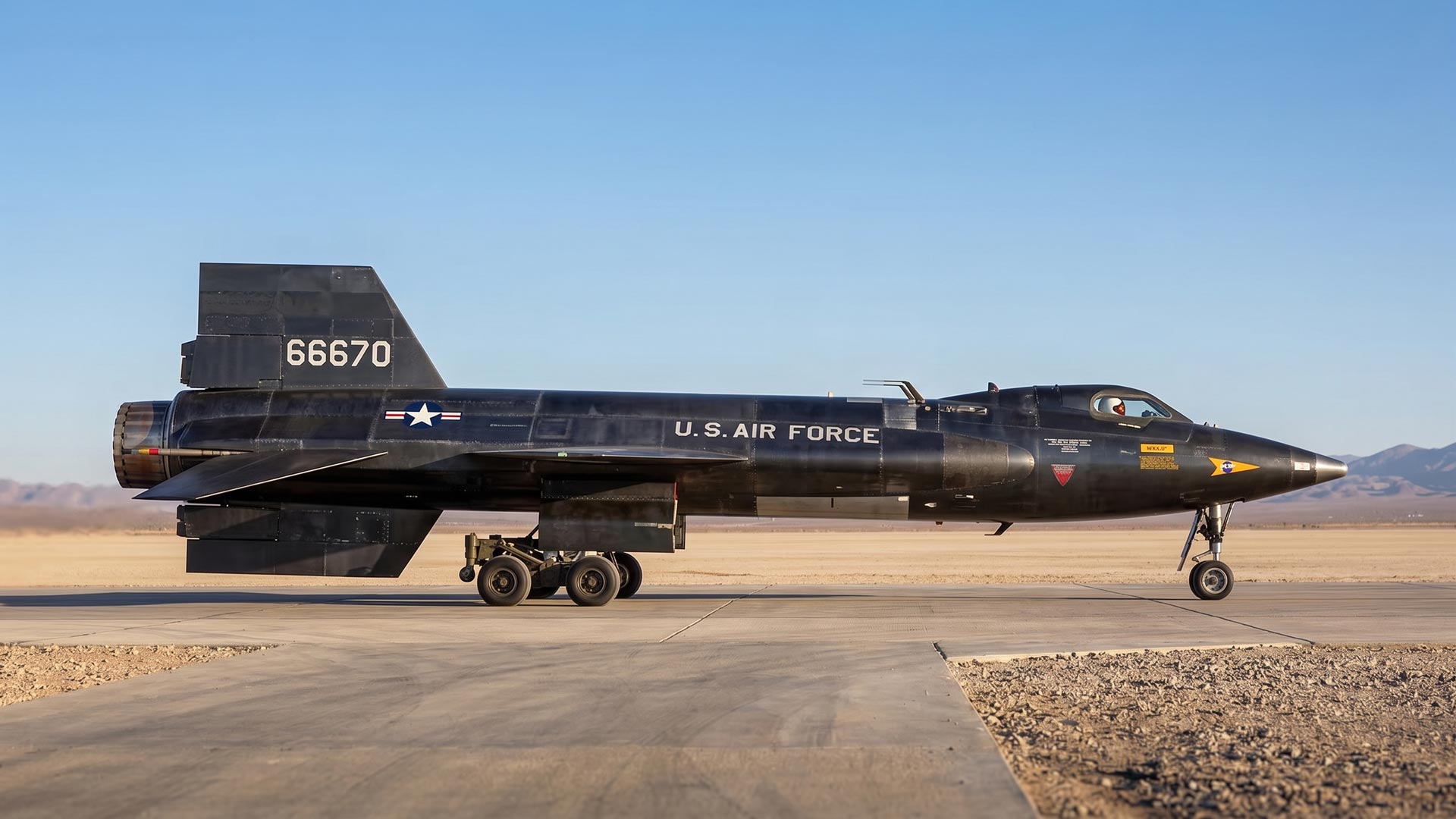
NASA's X-59 is a one-of-a-kind quiet supersonic research aircraft. It first flew on 28 October 2025 and went supersonic on 5 June 2026. It has reached Mach 1.53 so far. This guide covers how it works, its flights, its pilots, its specifications and what comes next.
What is NASA's X-59?
The X-59 is a one-of-a-kind experimental aircraft at the centre of NASA's Quesst mission, which is supported by NASA's Aeronautics Research Mission Directorate. This specific aircraft is designed to cruise quietly at Mach 1.4 at about 16,760 m (55,000 ft). Instead of a loud sonic boom, the design aims to produce a quiet thump. NASA projects that people on the ground will hear a sound similar to a car door closing approximately 6 m (20 ft) away. The designed loudness is intended to stay under 75 PLdB.
NASA has stated that neither the X-59 nor its engine is a prototype for a future commercial supersonic airliner. The hardware exists solely to prove quiet sonic thumps and measure how communities respond to the sound. This aircraft is operated by NASA's Armstrong Flight Research Center and carries no weapons. It is a specialised platform, so civilians cannot fly in it. You can find more technical details on the X-59 in the Jetify aircraft database.
Why the sonic boom is the problem the X-59 has to solve
Sonic booms occur when an aircraft travels at or above the speed of sound. At these speeds, air molecules cannot move out of an aircraft's way fast enough. This causes pressure waves to combine into a large shockwave that people on the ground hear as a sonic boom. The X-59 aims to change how this sound is perceived.
Current regulations restrict supersonic flight over land in the United States. Under US federal rule 14 CFR 91.817, no person may operate a civil aircraft in the United States faster than Mach 1 unless the FAA has issued that operator an authorisation to exceed Mach 1. This rule remains in force as of November 2026.
The Quesst mission has two specific goals to address these challenges. First, the team must build the X-59 with technology that reduces a sonic boom to a gentle thump. Second, NASA will fly the aircraft over several US communities. This allows the team to provide public-response data to national and international regulators. By collecting this data, the mission seeks to inform future rules regarding supersonic flight over populated areas.
How the X-59's shape turns a boom into a thump
The design of the X-59 uses specific geometry to manage how pressure waves travel through the air. A top-mounted engine serves as a key element in this process. On traditional supersonic aircraft, shock waves pile up on each other as they travel toward the ground, resulting in two shock waves that are heard as a sonic boom. The top-mounted engine on the X-59 helps to separate these shock waves that build up on the aircraft's surfaces during supersonic flight. This separation prevents the waves from merging. NASA also states that the top mount redirects airflow upward and away from the ground.
Physical dimensions also define the profile of this experimental jet. The aircraft has an overall length of about 30.4 m (99 ft 7 in) and a wingspan of about 9.0 m (29 ft 6 in). Its overall height is about 4.3 m (14 ft). The cockpit sits mid-fuselage and lacks a forward-facing window. To compensate for this, the eXternal Vision System uses cameras and high-definition displays to allow the pilot to see ahead and below the aircraft. This technology is particularly important during landing procedures.
From a modified F-5 to the X-59
The 2003 NASA Shaped Sonic Boom Demonstration used a modified Northrop F-5E to show how aircraft geometry can reduce sonic boom intensity. This demonstrator capped four decades of research into weakening these sounds. After the flight, test pilot Roy Martin said: "Chuck Yeager broke the sound barrier. We just fixed it." This mission follows the historical milestones of Chuck Yeager breaking the sound barrier.
NASA's Armstrong Flight Research Center has a long history of operating X-planes. The X-1 broke the sound barrier in 1947, while the X-15 later pushed speed and altitude to new extremes. From the 1960s, the X-24 shaped understanding of re-entry from space, and in the 1980s, the X-29 tested forward-swept wings. NASA says the X-59 continues that tradition with a mission focused on sound.
Lockheed Martin Aeronautics in Palmdale won the Low-Boom Flight Demonstration contract. This cost-plus-incentive-fee contract was valued at $247.5 million, with work starting on 2 April 2018. The aircraft was built by Lockheed Martin Skunk Works. NASA and Lockheed Martin unveiled the X-59 with a curtain drop at a ceremony at Skunk Works in Palmdale on 12 January 2024. NASA says watch parties were held at more than 285 locations in 21 countries during the unveiling.
Ground tests before the X-59 flew
NASA and Lockheed Martin conducted three increasingly complex engine tests at Skunk Works in Palmdale between October 2024 and January 2025. The first test involved checking the hydraulics, electrical and environmental control systems while the engine was idling. This was followed by throttle checks at full power with the afterburner at maximum, which produced shock diamonds in the night sky. The final set of tests involved throttle snaps, where the throttle is moved quickly back and forth to check for an instant engine response. NASA X-59 propulsion lead Raymond Castner said: "We had no major showstoppers."
The engine is similar to those used on the US Navy's F-18 Super Hornet. The nose of the X-59 is about 11.6 m (38 ft) long.
The X-59 completed its first low-speed taxi test at US Air Force Plant 42 in Palmdale on 10 July 2025. This marked the first time the aircraft moved under its own power. During this test, engineers and flight crews checked systems including steering and braking. These taxi tests began the final series of ground tests before the first flight.
The X-59's first flight
The X-59's first flight took place on 28 October 2025. The mission began with a short taxi from the Lockheed Martin Skunk Works facility to the runway at US Air Force Plant 42 in Palmdale, California. Taking off from the plant at 11:14 a.m. EDT, the aircraft completed its initial flight in 67 minutes. This first mission was flown by NASA X-59 lead pilot Nils Larson.
Flight parameters remained subsonic throughout the duration. The jet reached a speed of about 370 km/h (230 mph) and an altitude of approximately 3,660 m (12,000 ft). The landing gear remained down for the entire flight to allow for necessary system and performance checks. After flying north to Edwards Air Force Base, the aircraft circled before landing. The flight concluded when it taxied to its new home at NASA's Armstrong Flight Research Center.
Nils Larson provided reflections on the successful mission following the landing. "All the training, all the planning that you've done prepares you. And there is a time when you realize the weight of the moment. But then the mission takes over."
How the X-59 went supersonic
The X-59 first flew faster than the speed of sound on Friday 5 June 2026. Pilot Jim 'Clue' Less flew the aircraft from Edwards Air Force Base during this mission. The flight began at 11:08 a.m. PDT and lasted 81 minutes. During this time, the jet reached approximately Mach 1.1 (1,147 km/h), with the eXternal Vision System providing a Mach 1.077 readout. The altitude reached was about 13,230 m (43,400 ft).
A NASA F-15 chase plane flew alongside the aircraft during this first supersonic flight. The loud sonic booms from the F-15 obscured any sound produced by the X-59. The aircraft later reached its intended mission conditions on 12 June 2026. On that date, the X-59 reached Mach 1.4 at about 16,760 m (55,000 ft).
Its busiest week and a new top speed
The X-59 completed six flights during the week of 21 September 2026. These missions took place twice each on 22, 24 and 25 September. This frequency beat the previous weekly record by two flights. These missions brought the total to 38 test flights for the aircraft. One of these flights reached a speed of Mach 1.53 (about 1,625 km/h). This was the fastest speed reached by the jet to date. It is well above the intended cruise speed of Mach 1.4. Following this busy period, the aircraft entered a scheduled maintenance period of roughly three weeks.
The three test pilots flying the X-59
Nils Larson, Jim 'Clue' Less and Mike Lippert are the three NASA test pilots operating the X-59. Nils Larson received the Society of Experimental Test Pilots' Iven C. Kincheloe Award on 26 September 2026. He was recognised for leading the X-59 through its first flight and safely expanding its flight envelope to Mach 1.4 at about 16,760 m (55,000 ft). This was the first time in 44 years that an individual received this award for a NASA test flight project. Larson has alternated his piloting duties on the X-59 with Jim 'Clue' Less.
Mike Lippert flew the X-59 for the first time on 21 October 2026 from Armstrong. The flight lasted one hour, during which the aircraft reached Mach 1.4 at about 16,760 m (55,000 ft). This was his first X-plane flight during more than 21 years of flying high-performance aircraft, which included 11 years as a test pilot. Regarding the flight, Mike Lippert said: "It was a special moment for sure."
All three pilots are military veterans. Jim 'Clue' Less and Nils Larson served in the US Air Force. Mike Lippert served in the US Marine Corps.
Duct diving: how the X-59 is checked after every flight
Duct diving is a maintenance process where a mechanic climbs into the air inlet to inspect the aircraft. The X-59 features an air inlet that slopes down towards the single engine, allowing a person to enter. During these checks, the mechanic uses a torch to inspect the fan blades and performs a visual check of the exhaust. This method allows for detailed internal inspections after flight operations.
These procedures have been performed following the first 38 test flights. The checks conducted through this process found a damage-free engine. The design of the aircraft helps prevent damage during ground operations. Because the engine is mounted on top, it does not pull in debris that lower-mounted engines can suck up during take-off and landing.
How NASA will see and measure the X-59's shock waves
Two NASA F-15 research jets flew faster than sound in May 2025 to validate tools for measuring shock waves. These flights matched the expected conditions of the X-59 and were part of the SCHAMROQ project, which stands for Schlieren, Airborne Measurements, and Range Operations for Quesst. The work involves using a near-field shock-sensing probe that will fly behind the X-59 to measure small pressure changes. An Airborne Schlieren Photography System is also used to capture images showing density changes in the air caused by the aircraft. Engineering project manager Cheng Moua called the flights "a graduation exercise". One of the jets used was an F-15D from the US Air Force that arrived with no research instrumentation and is now a fully instrumented research platform.
Testing also took place in Chofu, Japan, where NASA and JAXA tested an X-59 scale model in a supersonic wind tunnel. This model was 1.62% of the full size, measuring about 48 cm (19 in) from nose to tail. The test conditions matched Mach 1.4. This was the third round of wind tunnel tests for the model, following earlier testing at JAXA and at NASA's Glenn Research Center in Ohio. The data gathered from these tests is compared with computer predictions from NASA.
X-59 specifications
The technical details of this experimental jet are defined by its specific mission requirements.
- Crew: 1 pilot
- Length: about 30.4 m (99 ft 7 in)
- Wingspan: about 9.0 m (29 ft 6 in)
- Height: about 4.3 m (14 ft)
- Empty weight: about 6,800 kg (14,990 lb)
- Maximum design gross weight: about 11,340 kg (25,000 lb)
- Engine: one General Electric F414-GE-100
- Thrust: about 98 kN (22,000 lb) with afterburner
- Landing gear: F-16 Block 25 (nose and main gear)
NASA describes the X-59 as its first purpose-built supersonic X-plane in decades. Because it is an experimental aircraft, it is flown by a single pilot and NASA says it will never carry passengers. You can find the full X-59 specifications in our aircraft database.
How fast is the X-59 compared with record-breaking jets?
The fastest speed reached by the X-59 is Mach 1.53, while it is designed to cruise at Mach 1.4 (about 1,489 km/h, which NASA gives as 925 mph). This aircraft focuses on quiet supersonic flight rather than setting speed records. Understanding what Mach numbers mean helps clarify the difference between its design goals and its peak performance. The goal is to maintain a designed loudness under 75 PLdB during cruise.
While the jet can fly faster, its primary mission is to manage how pressure waves travel through the air. If you are interested in seeing much higher speeds, you can read about the fastest fighter jets ever built. The X-59 remains a specialised experimental platform for acoustic research.
A cross-country tour after its first year
The X-59 completed 40 more flights after its initial mission during its first year of flight testing up to 28 October 2026. These test flights reached altitudes of more than 17,070 m (56,000 ft). Flight testing continues for the experimental aircraft.
In late October 2026, the X-59 left Edwards Air Force Base to begin a cross-country trip. The flight path included stops in El Paso, Fort Worth and Birmingham. This journey was intended to bring the aircraft to a static display at NASA's MAX POWER aerospace expo at Kennedy Space Center on 7-8 November 2026. NASA Armstrong centre director Brad Flick said: "Most X-planes only live in the restricted airspace here on center. This one is going to go out and fly around the country."
What happens next: the community flights
The mission moves into acoustic validation to measure the sounds the X-59 makes. This stage follows the initial build and ground-testing phases, as well as the flight-test phase known as envelope expansion. Once NASA takes formal delivery from Lockheed Martin, the team will begin flying over various US communities. These flights allow for surveying how residents respond to the noise. The project involves teams from four NASA aeronautics centres: Langley in Virginia, Glenn in Cleveland, Ames, and Armstrong in California.
Planning for these community overflight tests is already underway. In 2021, NASA awarded a contract to Harris Miller Miller & Hanson Inc. of Burlington, Massachusetts, to help plan, run, and document this third phase. This contract has a maximum potential value of about $29 million over eight years. The data gathered from these flights will be provided to national and international regulators. Such information is intended to help set future noise standards for supersonic flight over land.
Lockheed Martin says that the data from this acoustic phase could help regulators approve rules allowing quiet commercial supersonic flight over land. According to Lockheed Martin, such rules would cut commercial flight times to half of what they are today. NASA maintains that neither the X-59 nor its engine is a prototype for a future commercial supersonic airliner. The hardware exists to prove quiet sonic thumps and measure how communities respond.
Getting schools and communities ready
NASA's Office of STEM Engagement provided funding to five universities in February 2024 to prepare for community engagement. Carthage College (Wisconsin), Cornell University (New York), Old Dominion University (Virginia), the University of Puerto Rico in San Juan, and the University of California, San Diego each received $40,000. These funds allow these institutions to plan how they will involve students and educators in the areas where the X-59 flies. At the time these grants were issued, NASA had yet to select the specific communities for overflights. Quesst deputy mission integration manager Eric Miller said: "The Quesst mission is unique at NASA, with community input playing a major part in its success."
Can you fly in the X-59?
No, you cannot fly in the X-59. It is a one-of-a-kind experimental aircraft operated by NASA's Armstrong Flight Research Center and is flown by a single pilot. Because it is a specialised platform designed for acoustic research, civilians cannot fly in it. NASA says the aircraft will never carry passengers. It carries no weapons and serves as a purpose-built supersonic X-plane for testing. If you want to fly in a jet yourself, you can book fighter jet flights.
Metric
Frequently asked questions
Has the X-59 broken the sound barrier?
The NASA X-59 first flew faster than the speed of sound on Friday 5 June 2026. It reached approximately Mach 1.1, which is about 1,147 km/h (713 mph), at an altitude of approximately 13,230 m (43,400 ft). During this flight, the X-59 eXternal Vision System read Mach 1.077.
How fast has the X-59 flown?
NASA's X-59 has flown at a maximum speed of Mach 1.53. This flight reached approximately 1,625 km/h (1,010 mph) and stands as its fastest speed to date. This velocity is well above the cruise speed of Mach 1.4 (1,489 km/h [925 mph]). The aircraft completed six flights during the week of 21 September 2026.
Who built the X-59?
Lockheed Martin Skunk Works built NASA's X-59. Lockheed Martin Aeronautics won the Low-Boom Flight Demonstration contract to develop this aircraft. Work on the project began on 2 April 2018. The X-59 serves as the centrepiece of NASA's Quesst mission. This mission is supported by NASA's Aeronautics Research Mission Directorate.
Why does the X-59 have no front window?
NASA's X-59 has no front window because the long nose blocks all forward view from the cockpit. The pilot uses NASA's eXternal Vision System to see ahead. This system uses cameras and high-definition displays. It allows the pilot to see ahead and below the aircraft during landing.
Who flies the X-59?
NASA test pilots Nils Larson, Jim 'Clue' Less, and Mike Lippert fly the X-59. These three pilots are all military veterans. Nils Larson and Jim 'Clue' Less served in the US Air Force, while Mike Lippert was in the US Marine Corps. Larson and Less have alternated piloting duties for the aircraft.
Sources
Researched and fact-checked with the help of AI tools and Ahrefs data.
- NASA: Quesst mission
- NASA: Celebrates a Year of Progress Since First X-59 Flight (28 Oct 2026)
- Lockheed Martin: X-59 product card (PDF)
- NASA: NASA takes delivery of GE jet engine for X-59
- NASA: Quesst, the science
- US Electronic Code of Federal Regulations (14 CFR 91.817)
- NASA: Quesst, the mission
- NASA: Diving into maintenance with NASA's X-59 (16 Oct 2026)
- NASA: X-59 completes first flight, prepares for more flight testing
- NASA: X-59 Debuts (special report)
- NASA: contract award for the Low-Boom Flight Demonstrator (April 2018)
- NASA: X-59 turns up the power, throttles through engine tests (Feb 2025)
- NASA: X-59 completes first low-speed taxi test (July 2025)
- NASA: X-59 lifts off for first flight (28 Oct 2025)
- Space.com: X-59 makes historic first flight
- NASA: X-59 first supersonic flight (June 2026)
- Lockheed Martin: X-59 Quesst
- NASA: X-59 completes record six flights in one week (2 Oct 2026)
- NASA: X-59 pilot receives top test pilot award (9 Oct 2026)
- NASA: Mike Lippert takes controls of X-59 for first time (22 Oct 2026)
- NASA: Honoring NASA's X-59 test pilots on Veterans Day (11 Nov 2026)
- NASA: NASA F-15s validate tools for Quesst mission (June 2025)
- NASA: X-59 model tested in Japanese supersonic wind tunnel (July 2025)
- NASA: Quesst, the vehicle
- Aerospace Global News: X-59 heads to Florida on first-flight anniversary
- NASA: NASA selects contractor for quiet supersonic flight community testing (2021)
- Lockheed Martin: Skunk Works rolls out X-59 (12 Jan 2024)
- NASA: NASA grants to engage students in quiet supersonic community overflight (Feb 2024)
More on this aircraft
Dispatch
More in your inbox.
Written by

Loui Chen
Researcher, Jetify
Loui Chen is a researcher for Jetify and has worked in its parent group since 2021. She researches the aircraft, operators and flight locations covered in the Jetify journal, and checks specifications, histories and booking details against operator and published sources before an article goes live.
View profileLinkedInRead next