
Lockheed Martin Skunk Works
What Is The X-59?
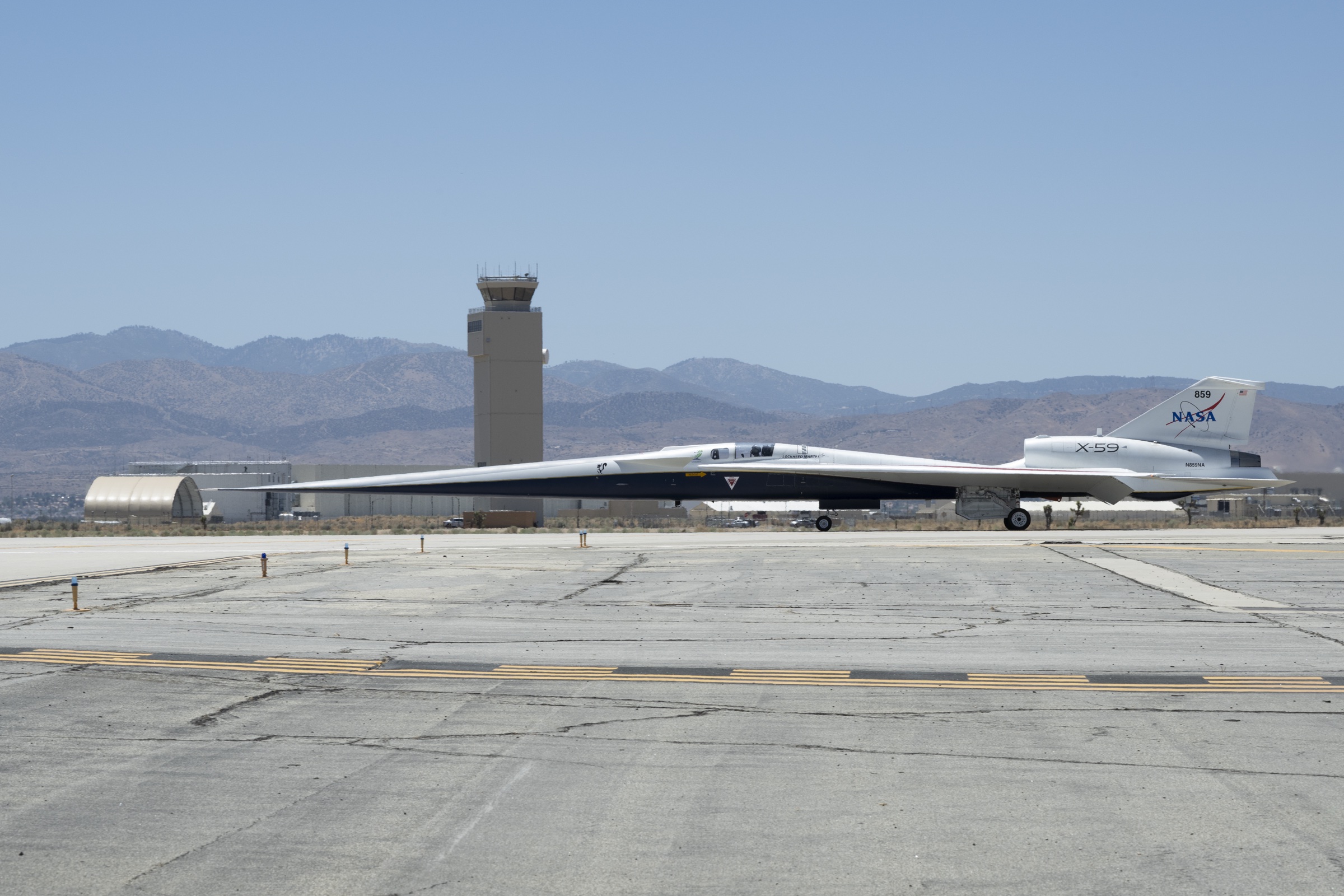
NASA's experimental quiet supersonic X-plane, the X-59, was built by Lockheed Martin Skunk Works to turn sonic booms into a quiet thump. It is the centrepiece of NASA's Quesst mission. During flight testing, it has reached speeds up to Mach 1.53 and altitudes of more than 17,070 m (56,000 ft). Flight testing continues.
United States
Origin
Quiet supersonic research
Role
Mach 1.53 (so far)
Top speed
17,070 m+
Service ceiling
X-59 Specifications
The NASA X-59 is a long, slender single-engine aircraft. It features an overall length of about 30.4 m (99 ft 7 in) and a wingspan of about 9.0 m (29 ft 6 in). The aircraft has an overall height of about 4.3 m (14 ft) and uses one General Electric F414-GE-100 engine. It is designed for Mach 1.4.
Performance
Top speed
Mach 1.53 so far, about 1,625 km/h (NASA: about 1,010 mph); designed to cruise at Mach 1.4
Service ceiling
More than 17,070 m (56,000 ft) reached so far
Combat radius
Not applicable (research aircraft)
Rate of climb
Not published
Airframe
Crew
1
Length
About 30.4 m (99 ft 7 in)
Wingspan
About 9.0 m (29 ft 6 in)
Empty weight
About 6,800 kg (14,990 lb)
Engine
1 × General Electric F414-GE-100, about 98 kN (22,000 lb) thrust with afterburner
Service
First flight
28 October 2025
Unit cost
One built. Lockheed Martin design-and-build contract valued at $247.5 million (2018)
Operators
NASA (Armstrong Flight Research Center)
What Weapons Does The X-59 Carry?
The NASA X-59 carries no weapons. As a one-of-a-kind research aircraft, it is built solely for the NASA Quesst mission. Because this plane serves as a centrepiece for scientific study, civilians cannot fly in it.
Weapon
Category
Loadout
Range
None
Category
N/A
Loadout
None
Range
N/A
Category
Loadout
Range
Category
Loadout
Range
Category
Loadout
Range
Category
Loadout
Range
Category
Loadout
Range
Category
Loadout
Range
Category
Loadout
Range
Category
Loadout
Range
Category
Loadout
Range
Category
Loadout
Range
How Fast Is The X-59?
The fastest the aircraft has flown so far is Mach 1.53. This speed was reached during its first year of flight testing, which included 40 flights after the initial takeoff. These test flights reached altitudes of more than 17,070 m (56,000 ft). The aircraft first flew faster than the speed of sound on 5 June 2026. On that day, it reached approximately Mach 1.1, which is about 1,147 km/h (713 mph), at an altitude of about 13,230 m (43,400 ft).
A week later, the aircraft reached Mach 1.4 at about 16,760 m (55,000 ft). This is the design cruise speed for the aircraft. NASA defines Mach 1.4 as 1,489 km/h (925 mph). The purpose of reaching this speed is for quiet supersonic flight rather than setting records. At this altitude, the aircraft is designed to produce a quiet thump instead of a loud sonic boom. NASA projects this sound will be like a car door closing about 6 m (20 ft) away. While enthusiasts may look for fastest fighter jets, this aircraft focuses on acoustic validation. Flight testing continues.
How Was The X-59 Developed?
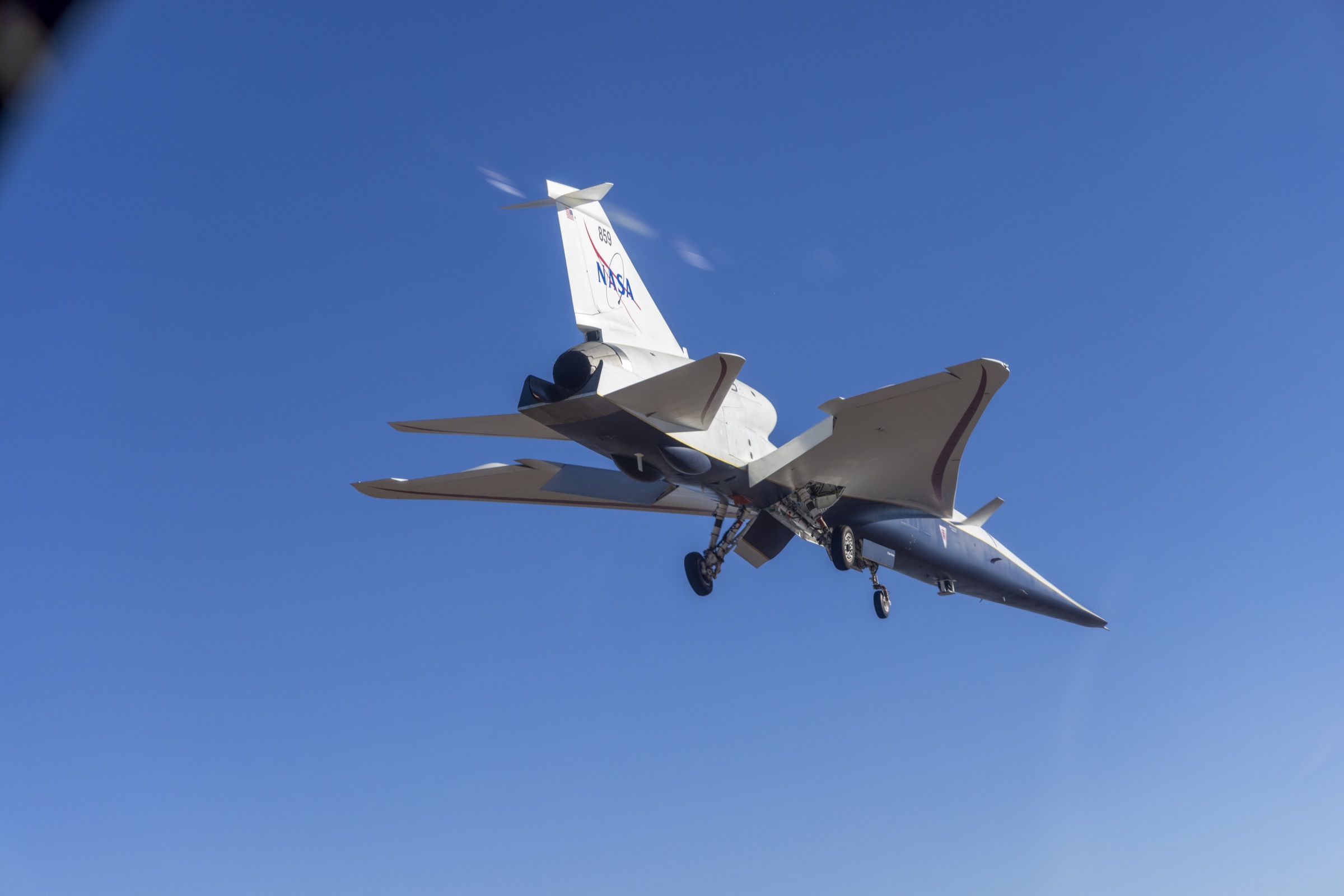
Lockheed Martin Aeronautics in Palmdale won the Low-Boom Flight Demonstration contract to build the aircraft. This cost-plus-incentive-fee contract was valued at $247.5 million and work began on 2 April 2018. The aircraft was built by Lockheed Martin Skunk Works.
Technical components include a single General Electric F414-GE-100 engine. This engine is nearly 4 m (13 ft) long and about 0.9 m (3 ft) across, producing approximately 98 kN (22,000 lb) of thrust with afterburner. GE derived this engine from the single-engine F414 developed for Saab's JAS 39E Gripen. The landing gear consists of the nose and main gear from an F-16 Block 25.
The first flight took place on 28 October 2025. Pilot Nils Larson flew the aircraft during this initial flight. The mission began at US Air Force Plant 42 in Palmdale, California. It travelled from the Lockheed Martin Skunk Works facility to NASA's Armstrong Flight Research Center.
Has The X-59 Seen Combat?
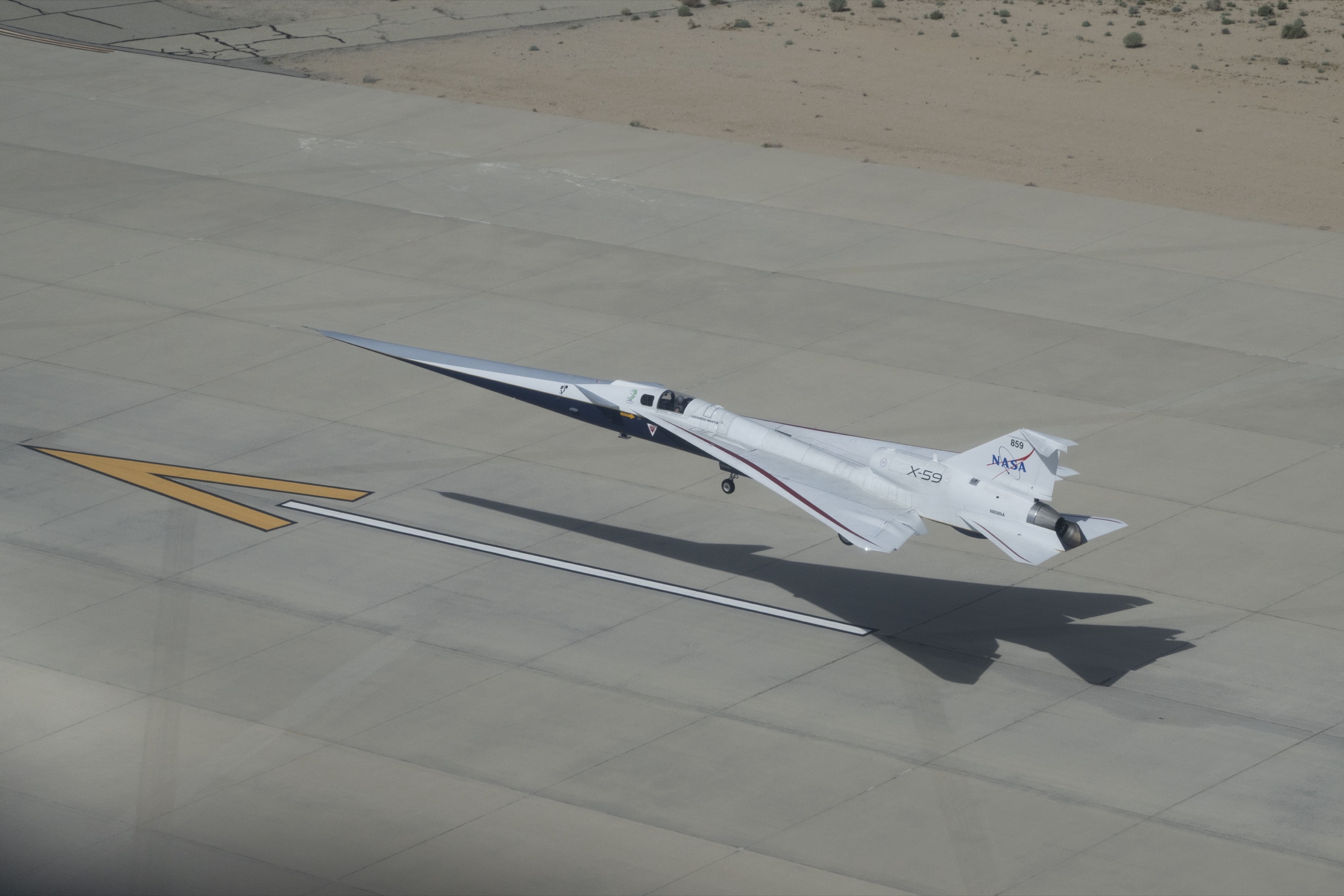
The NASA X-59 has never seen combat. It is an unarmed research aircraft designed specifically for the NASA Quesst mission. Because it serves as a scientific tool, it carries no weapons. NASA says neither the X-59 nor its engine is a prototype for a future commercial supersonic airliner. The hardware exists to prove quiet sonic thumps and measure community response instead of being built for passenger transport.
Who Operates The X-59?
NASA operates the X-59 from the Armstrong Flight Research Center. This one-of-a-kind aircraft serves as the centrepiece of NASA's Quesst mission, which is supported by NASA's Aeronautics Research Mission Directorate. Because it is a research aircraft, civilians cannot fly in it.
The next phase involves acoustic validation to measure the sounds the aircraft makes. This will be followed by flights over US communities to survey how people respond to the noise. The data collected goes to US and international regulators to help set noise standards for supersonic flight over land.
In late October 2026, the X-59 left Edwards Air Force Base for a cross-country trip. This flight included stops in El Paso, Fort Worth and Birmingham. The aircraft travelled to a static display at NASA's MAX POWER aerospace expo at Kennedy Space Center on 7-8 November 2026.
X-59 FAQs
Common questions about the X-59, its capabilities and whether civilians can fly it.
How fast is the X-59?
NASA's X-59 has reached speeds up to Mach 1.53 during its flight testing period. This testing phase includes 40 flights completed after the initial flight. Flight testing continues.
Has the X-59 broken the sound barrier?
The NASA X-59 first flew faster than the speed of sound on Friday 5 June 2026. It reached approximately Mach 1.1, about 1,147 km/h (713 mph), at about 13,230 m (43,400 ft). The eXternal Vision System read Mach 1.077 during this flight. The X-59 has reached Mach 1.53 so far.
Why is the X-59 quieter than other supersonic jets?
The NASA X-59 is designed to cruise quietly at Mach 1.4 at about 16,760 m (55,000 ft). Instead of a loud sonic boom, people on the ground should hear a thump like a car door closing about 6 m (20 ft) away. Its design keeps loudness under 75 PLdB.
Who built the X-59?
Lockheed Martin Skunk Works built the X-59. Lockheed Martin Aeronautics (Palmdale) won the Low-Boom Flight Demonstration contract, which was a cost-plus-incentive-fee contract valued at $247.5 million. Work on this project started on 2 April 2018. This contract was awarded by NASA to develop the Low-Boom Flight Demonstrator.
Why doesn't the X-59 have a front window?
NASA's X-59 lacks a front window because the long nose blocks all forward view from the cockpit. Instead, the pilot uses NASA's eXternal Vision System to see ahead. This system uses a camera and cockpit display to provide the necessary visibility for flight operations.
Can civilians fly in the X-59?
Civilians cannot fly in the X-59. This aircraft is operated by NASA's Armstrong Flight Research Center. It is a one of a kind plane that carries no weapons. Because it is used for research, the flight remains restricted to specific personnel.
Explore the database