
Explainer
What Is Mach 1? Mach Numbers Explained, from Mach 1 to Mach 10
Loui Chen
October 13, 2026
6
min read
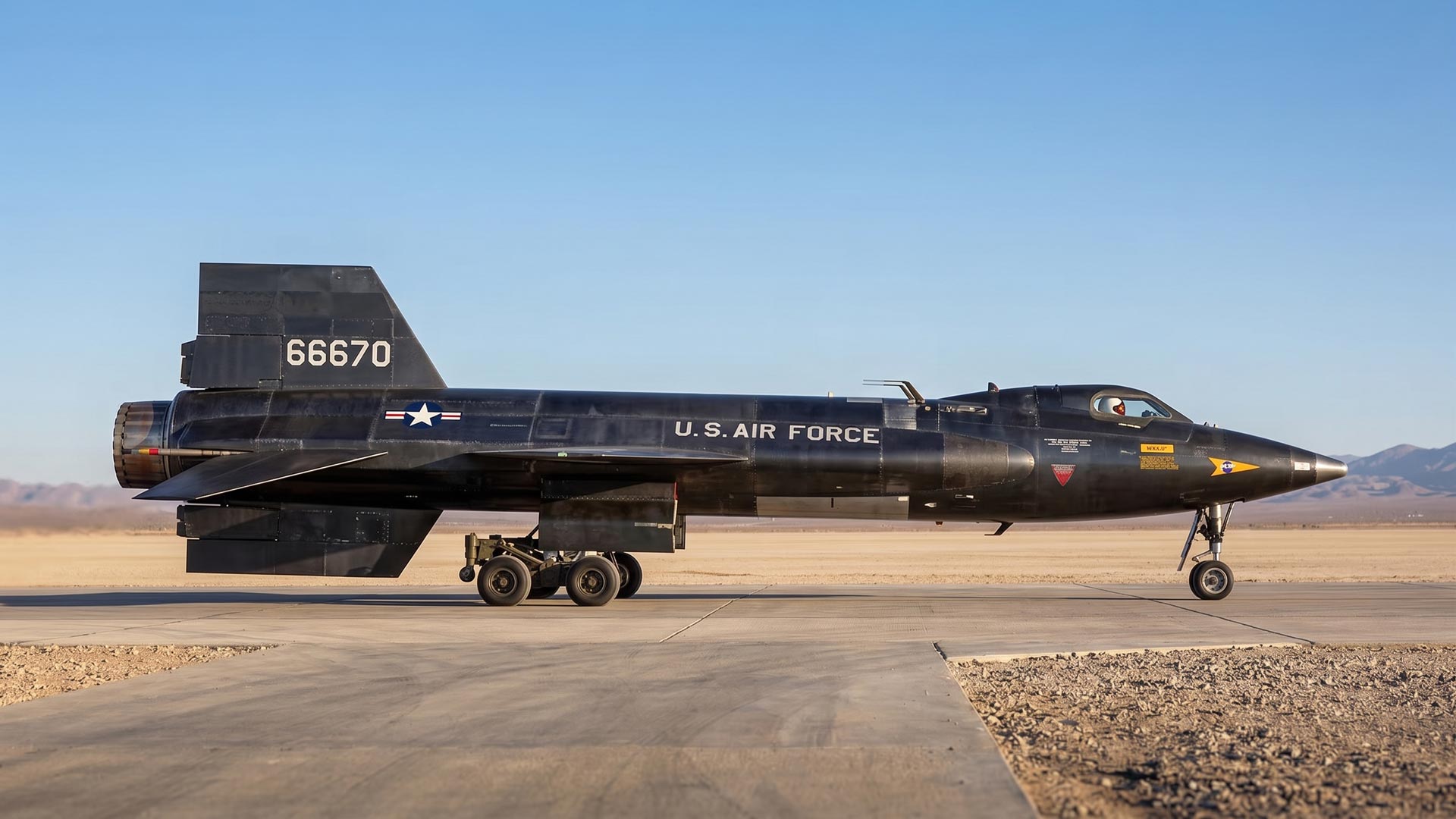
The X-15. The fastest manned-aircraft at Mach 6.7.
Mach 1 is the speed of sound. At standard sea level conditions (around 15 ℃ or 59℉) is approximately 761.2 mph or 1,225 km/h and 661.7 knots.Although sound travels differently through the air depending on the conditions, the true speed of Mach 1 is not fixed and changes with the temperature of the air and altitude.
Mach 1 conversions in mph, km/h, kn and m/s
In standard conditions, Mach 1 is equivalent to:
- 761.2 miles per hour
- 1,225.2 kilometers per hour
- 661.7 knots
- 340.3 meters per second
Why does Mach speed change with altitude?
Sound speed primarily depends on air temperature rather than air pressure – when an aircraft climbs into high altitudes, the air temperature drops which causes the speed of sound to drop.
At sea level Mach 1 is achieved at 761 mph (1,225 km/h); while at cruising altitude at 36,000 ft, the air temperature is -56.5℃ Mach 1 is achieved at 659.9 mph (1,062 km/h). So an aircraft flying at Mach 1 at a high altitude is physically slower relative to an aircraft flying at Mach 1 at sea level.
Mach speeds from Mach 0.5 to Mach 10
Speeds below Mach 1 are considered to be subsonic speeds as they are below the speed of sound.
Transonic is a mix of subsonic and supersonic airflow and includes speeds from Mach 0.8 to 1.2.
Sonic speed in dead-on Mach 1 – the exact speed of sound.
Supersonic means Mach 1.2 to 5, these speeds are capable of producing sonic booms and creates a ‘Mach cone’.
Speeds of Mach 5 to 10 are considered hypersonic.
Any speed exceeding Mach 10 is simply considered high hypersonic and re-entry speeds (approximately Mach 25 or higher).
Mach 0.5
At Mach 0.5, speeds are subsonic.
At sea level, Mach 0.5 hits 380.6 mph, 612.6 km/h. At 36,000 ft: 330 mph, and 531 km/h.
The benchmark for Mach 0.5 would be commercial turboprops, while commercial airliners like the Boeing 787 hit speeds of 0.85.
Mach 1
At Mach 1, it is the speed of sound.
At sea-level, speeds hit 761.2 mph, and 1,225.2 km/h. At 36,000 ft, speeds hit 659.9 mph and 1,062 km/h.
For example there’s the X-1, which was the very first supersonic flight reaching Mach 1.06.
Mach 2
As we press over Mach 1, supersonic speeds are achieved.
At sea level, Mach 2 hits 1,522.4 mph and 2,450.4 km/h. While at 36,000 ft, 1,319.8 mph and 2,124 km/h.
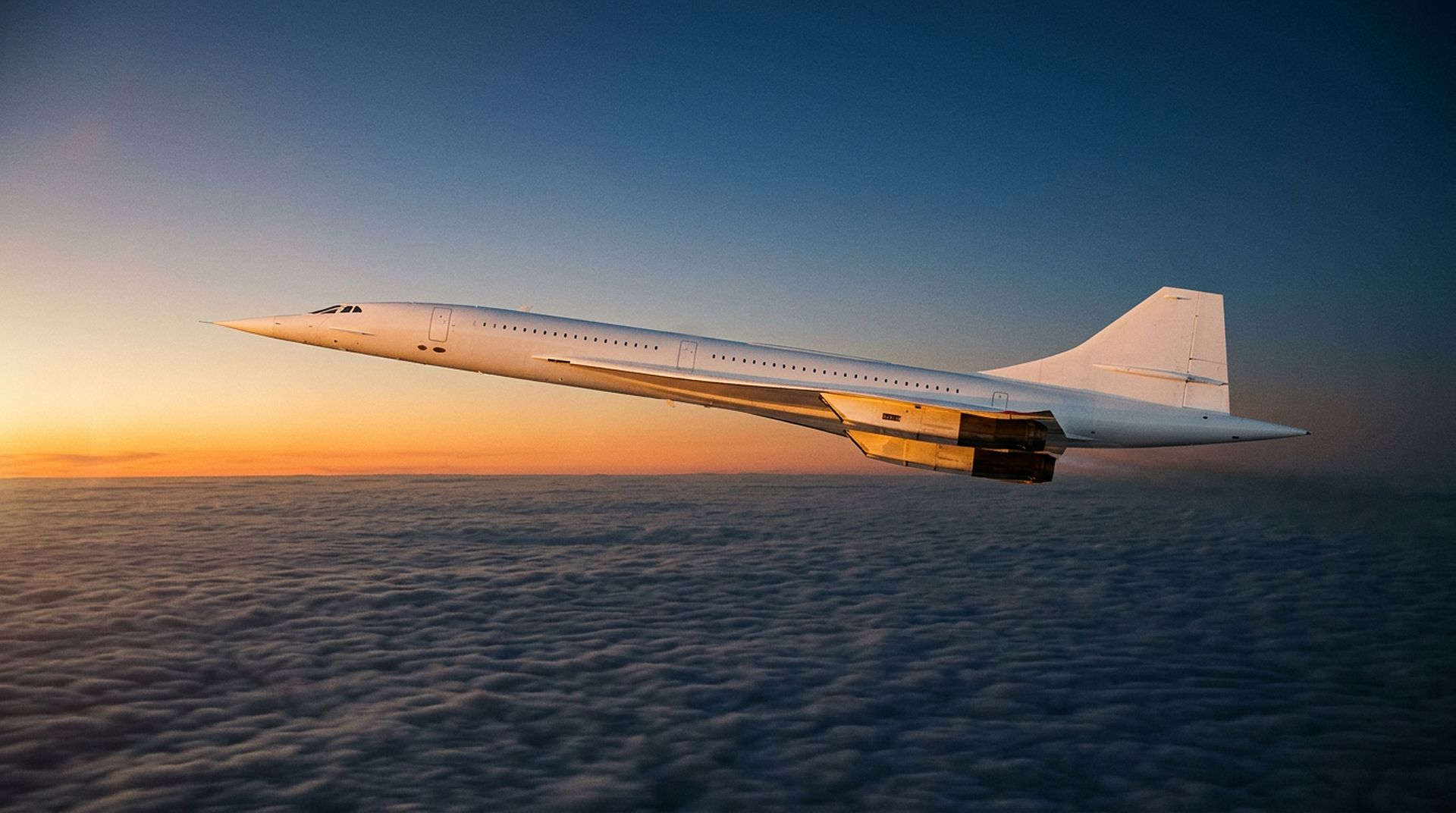
Aircrafts like the Concorde and Eurofighter Typhoon can fly at these speeds.

Mach 3
At sea-level, Mach 3 hits 2,283.7 mph and 3,675.6 km/h and at 36,000 ft, 1,979.7mph and 3,186 km/h.
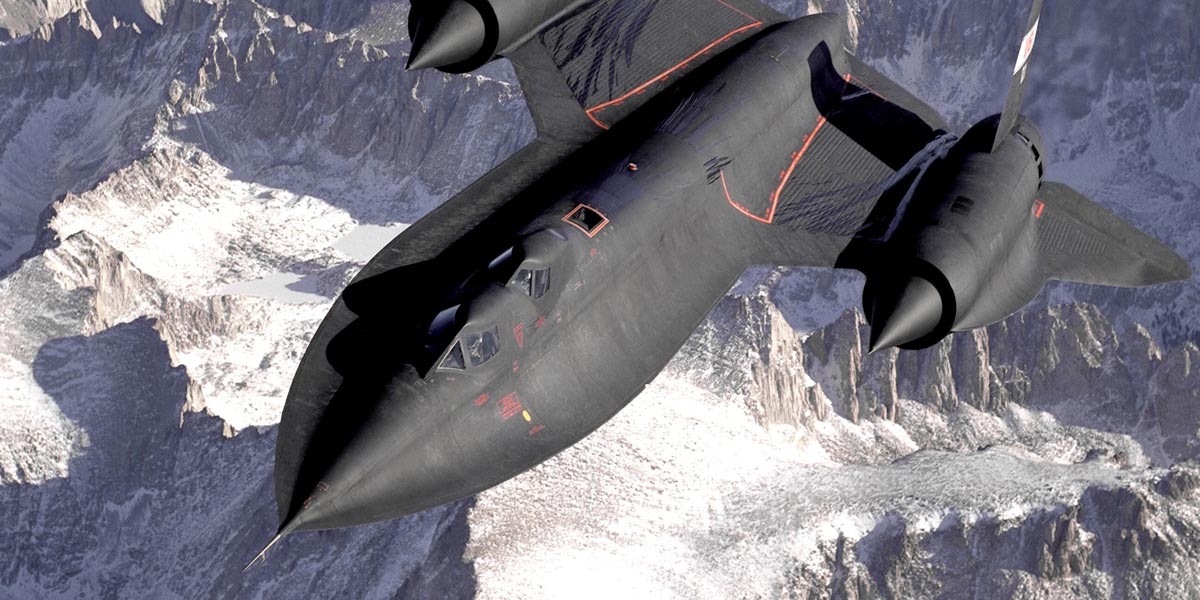
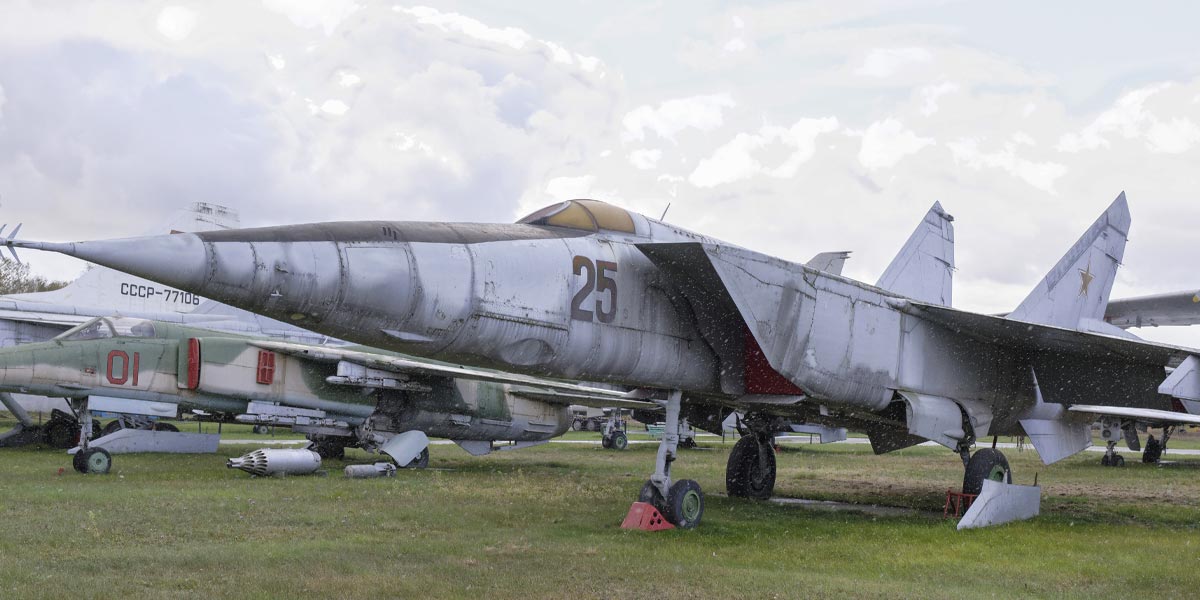
A few iconic aircrafts hitting Mach 3 speed are for example the Lockheed YF-12 which can hit Mach 3.3, or at Mach 3.2, the SR-71 Blackbird and the MiG-25 Foxbat.
As we climb to higher Mach numbers, past this point, most aircrafts hitting these speeds are experimental and test vehicles and those that need to approach low earth orbit and beyond.
Mach 4
At sea-level, Mach 4 reaches 3,044.6 mph and 4,900.8 km/h. At 36,000 ft, 2,111.7 mph and 3,398.4 km/h.
High speed Ramjet test vehicles usually sit in and around Mach 4 and can sometimes, exceed those speeds too. Take for example, the Ramjet-X.
Mach 5
At Mach 5, we approach the hypersonic threshold.
To reach Mach 5 at sea-level, speeds must reach 3,806 mph and 6,167 km/h. At 36,000 ft, 3,288.4 mph and 5,310 km/h.
HGVs, or hypersonic glide vehicles are a great example of typically Mach 5 speed. Hypersonic glide vehicles are unpowered (no engines) warheads that are launched from atop a rocket launcher (or a ballistic missile booster), travelling at speeds of Mach 5 or greater.
Mach 6
At sea-level to reach Mach 6, required speeds hit 4,567.2 mph and 7,351.2 km/h. At 36,000 ft, speeds hit 3,959.4 mph and 6,372 km/h.
Examples of Mach 6 include Scramjet propulsion vehicles which can be an aircraft or missile which is designed with an advanced engine for hypersonic flight. It lacks any moving parts at all and relies solely on extreme forward velocity to compress air for combustion. For example, the CJ-1000 or the SR-72 Darkstar – or the North American X-15.
Mach 7
At sea-level Mach 7, speeds are 5,328.4 mph or 8,576.4 km/h. At 36,000 ft, 4,619.3 mph and 7,434 km/h.
Some examples include NASA’s X-43A – an unmanned and experimental aircraft using a scramjet engine and a rocket booster. Or, the Chinese MD-Series’, an unmanned aircraft/drone launched from a high-altitude balloon.
Mach 8
At sea level, Mach 8’s speed is at 6,089.6 mph and 9,801.6 km/h while at 36,000 ft, 5,279.2 mph or 8,496 km/h.
Moving at Mach 8 are often experimental boosters – although hypersonic cruise missiles, like those from a 3M22 Zircon and the ET-LDHCM can hit Mach 8 speeds – for aircrafts, reaching these speeds are more difficult but there are experimental and conceptual aircrafts looking to touch Mach 8.
Mach 9
At sea level, Mach 9 is achieved at 6,850.8 mph and 11,026.8 km/h. At 36,000 ft, it’s at 5,939.1 mph and 9,558 km/h.
Like Mach 8, Mach 9 speeds often are difficult to achieve, but the previously mentioned X-43A by NASA has previously made a top-speed record of Mach 9.6. Or the conceptual Venus Aerospace Stargazer which endeavours to reach Mach 9.
Mach 10
At sea level, Mach 10 is achieved at 7,612 mph or 12,252 km/h. At 36,000 ft, it’s achieved at 6,599 mph or 10,620 km/h.
Whilst the X-43A mentioned previously has crept close to Mach 10, and is designed to test up to Mach 10 – a better example of consistently Mach 10 speed can be seen in some glide vehicles or hypersonic missiles.
Airflow behaviour and categorisation for Mach speeds
Aeronautical engineers classify different speeds based on how the airflow behaves around the airframe.
When measuring Mach speed, 3 elements are considered. The aircraft’s speed – as in how fast an aircraft is moving; the airflow around the aircraft, and as airflow curves around the shape of the aircraft some parts may accelerate so the airflow can be faster or slower against some parts of the aircraft; critical Mach number – this is represented by the lowest flight speed for any part of the airflow around the aircraft reaches Mach 1.
An aircraft, due to shape and design, can have airflow reaching Mach 1 even while going at subsonic speeds.
To explain the airflow around different Mach speeds simply:
Subsonic – under Mach 0.8: airflow around the entirety of the aircraft remains below the speed of sound
Transonic – Mach 0.8 to Mach 1.2: airflow around the aircraft is supersonic in some parts while other parts remain at subsonic speeds. Supersonic airflow can be achieved, usually over part of the wings, even if the aircraft’s true speed is subsonic. Transonic speeds can create severe shockwaves and drag.
Supersonic – Mach 1.2 to 5: The entirety of the aircraft travels faster than the speed of sound. The airflow all around the aircraft is supersonic. Although initially, airflow that meets the leading edge (foremost edge of an aircraft’s wing) is initially decelerated so for lower speeds the airflow may not be completely supersonic so for all the airflow to remain supersonic all over, the aircraft must move slightly greater than Mach 1. A sonic boom shockwave is continually generated.
Hypersonic – Mach 5 to 10+: the extreme friction caused by these high speeds create chemical reactions in the surrounding air molecules which requires advanced heat shielding considerations.
Frequently asked questions (FAQs)
What causes a sonic boom?
When an object – usually an aircraft or bullet for example – reaches supersonic speed, it’s travelling exactly as fast as the sound waves it’s creating – these sound waves are compressed into a single, high-pressure shockwave which causes a loud, explosive noise called a ‘sonic boom’ and travels continuously until the object is no longer at supersonic speed.
What is the fastest manned jet ever recorded?
The record for the fastest crewed jet belongs to the SR-71 Blackbird, Although, the record for the fastest aircraft is the rocket-powered X-15.
Can commercial passenger planes fly at Mach 1 or faster?
Most commercial airliners now fly at Mach 0.8 – 0.85 in order to be fuel-efficient whilst avoiding shockwave drag. Though historically, as seen through examples like the Concorde, flew faster than Mach 1 regularly. The Concorde could even reach a cruising speed of Mach 2.04 during commercial service. So the answer is yes and no, some commercial passenger planes could fly at Mach 1 and beyond, but modern commercial airliners now prioritise cost and fuel efficiency and are not designed for supersonic speeds.
Why is speed measured in Mach rather than mph or knots in aerospace and aviation?
Aerospace engineers and pilots measure in Mach numbers because an airframe’s performance, structural load, and characteristics are dependent on how fast it travels relative to the speed of sound rather than physical speed over the ground. Mach factors in airflow around the aircraft – not just pure speed over surface.
As speed of sound is variable depending on air temperature, expressing speed through a Mach number means that pilots and engineers know the critical aerodynamic boundaries regardless of the altitude.
Metric
More on this aircraft
Dispatch
More in your inbox.
Written by

Loui Chen
Researcher, Jetify
Loui Chen is a researcher for Jetify and has worked in its parent group since 2021. She researches the aircraft, operators and flight locations covered in the Jetify journal, and checks specifications, histories and booking details against operator and published sources before an article goes live.
LinkedIn